Guide · 8 minute read
Porcelain vases: a 10-step guide to choosing the right piece
How to recognise porcelain, how it differs from ceramics and how to choose the right vase for your home, step by step.
Porcelain vases have something you feel before you understand it. They're cool and smooth under your fingers, they have a quiet weight and a light of their own that seems to come from within. If you want one for your home, or for someone dear, you only need a few pointers: what porcelain is, how to recognise it, how to choose the shape, size and colour, and how to look after it. Let's take them one by one, in 10 steps.
Why we love porcelain vases
Porcelain was born in China many centuries ago and reached Europe as a treasure. It was so prized that for a long time it was called “white gold”. Today you'll find it on modern shelves, dining tables and console tables in bright hallways.
What made it loved then makes it loved now. It's fine. It's durable. It keeps its colour clean for years. And it has a simple elegance that suits a minimalist living room just as well as a home full of memories.
A porcelain vase doesn't shout. It holds the flowers, holds the light and lets the room breathe.
Step 1: Understand what porcelain is
Porcelain is a ceramic. A special one. It's made from a mix of very fine white clay called kaolin with other minerals, and fired at very high temperatures, usually over 1,200 degrees.
At that heat, the body vitrifies. In other words, it turns into a dense, almost glass-like material with very few pores. That's where all its qualities come from: it's hard, smooth, doesn't easily absorb water or smells, and can be shaped into thin, elegant walls.
Step 2: Porcelain vs ceramic, the difference you feel in your hand
When you search for “porcelain vs ceramic”, you're really comparing porcelain with other everyday ceramics, such as earthenware or clay fired at lower temperatures.
- Porcelain is denser, smoother and usually finer to the touch. Its body is white.
- Ordinary ceramic is more porous. It needs glaze to hold water, and where the glaze is missing you feel a rougher surface, sometimes coloured, reddish or beige.
- Weight tells you something too. In the same shape, porcelain feels compact and firm, while thick ceramic feels more “earthy”.
It isn't that one is good and the other bad. They're two different characters. Ceramic has its rustic charm. Porcelain brings finesse and a clean light.
Step 3: How to recognise porcelain
A few gentle tests you can do in the shop or at home:
- The light test. Hold the vase up to a light source. Where the walls are thin, porcelain lets light through slightly, like fine paper. With thick or matt pieces the effect is harder to see, so don't rely on it alone.
- The sound test. Tap the rim lightly with your fingernail. Porcelain answers with a clear sound that rings for a moment. Porous ceramic sounds duller.
- The base. Turn the vase over. Where there's no glaze, porcelain shows a white, fine, hard body. Ordinary ceramic often shows a coloured, rougher body.
- The touch. Porcelain is smooth and cool. Even the matt version, without shine, has a fine texture, like polished stone.
Step 4: Old porcelain vases, what to look for
Old porcelain vases have a story. You find them in your grandparents' home, at flea markets, in antique shops. If you have one and wonder what it's worth, look at:
- The mark on the base. Many manufacturers signed their pieces. The mark helps you find out where the vase comes from, but it isn't a guarantee. Porcelain has been copied a lot, marks included.
- Signs of use. An old piece usually has discreet, natural wear on the base, where it has sat on tables for years.
- Condition. Cracks, chips and repairs lower the value.
For an old porcelain vase that seems valuable, the safest step is an experienced valuer or antiques dealer. And if you simply love it, keep it on display. It deserves to be seen.
Step 5: Choose the spot before the vase
Before you choose the vase, choose the spot. Stand in the room for a moment and notice where your eye goes. An empty console table. The corner by the window. The dining table.
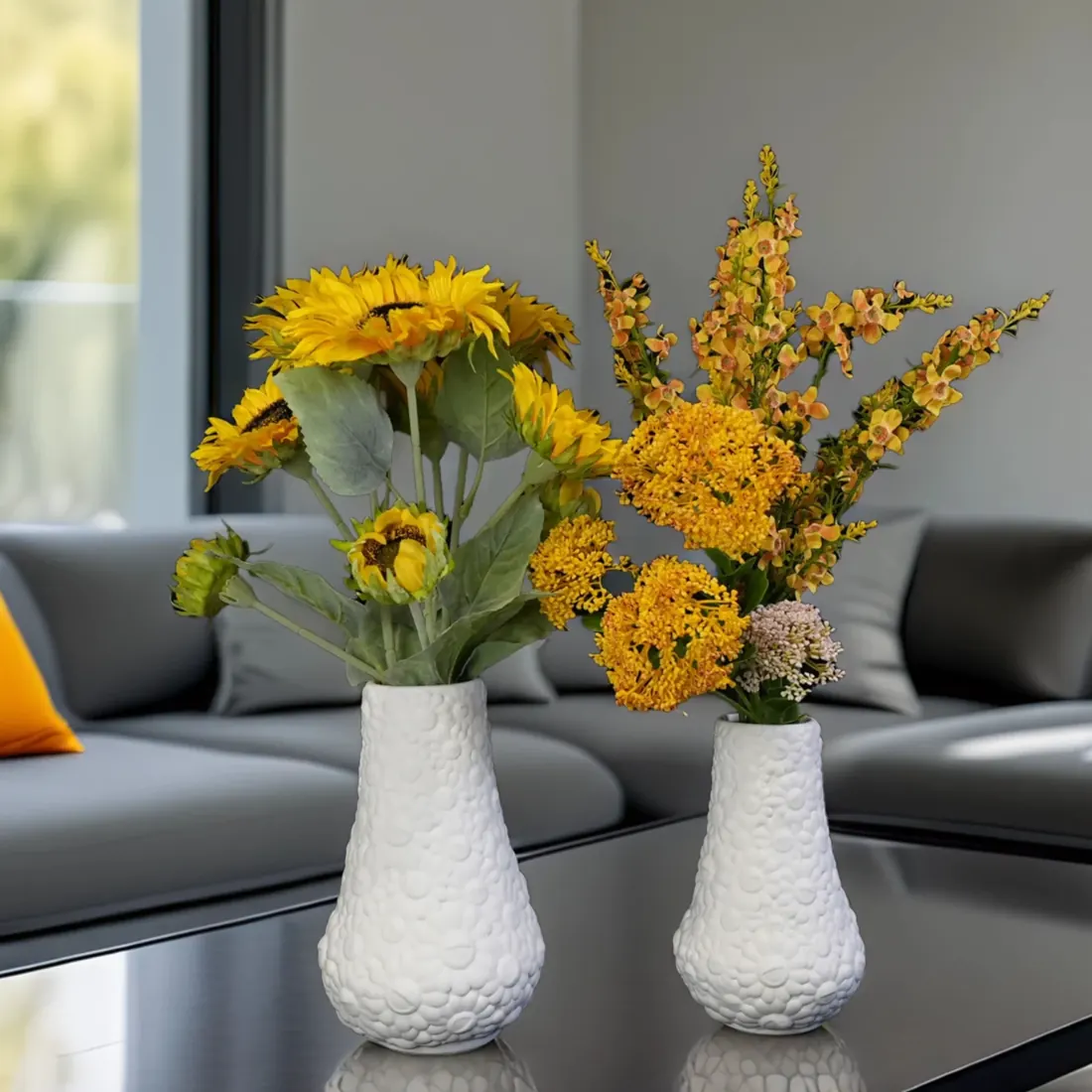
The spot tells you the size. On a coffee table, a low or medium vase lets the eye pass over it. On a console table or a chest of drawers, a taller vase gives the wall rhythm. On a shelf, a small vase or a set of two adds a fine detail. We wrote about this at length in our guide to decorative vases for the living room, size and colour.
Step 6: Choose the shape for your flowers
The shape of the vase decides how the flowers will sit.
- A wide mouth takes full, round bouquets with heavy flowers, like peonies or hydrangeas.
- A narrow mouth holds a few stems, straight and clean, or even just one.
- A tall, slender vase loves long stems and branches.
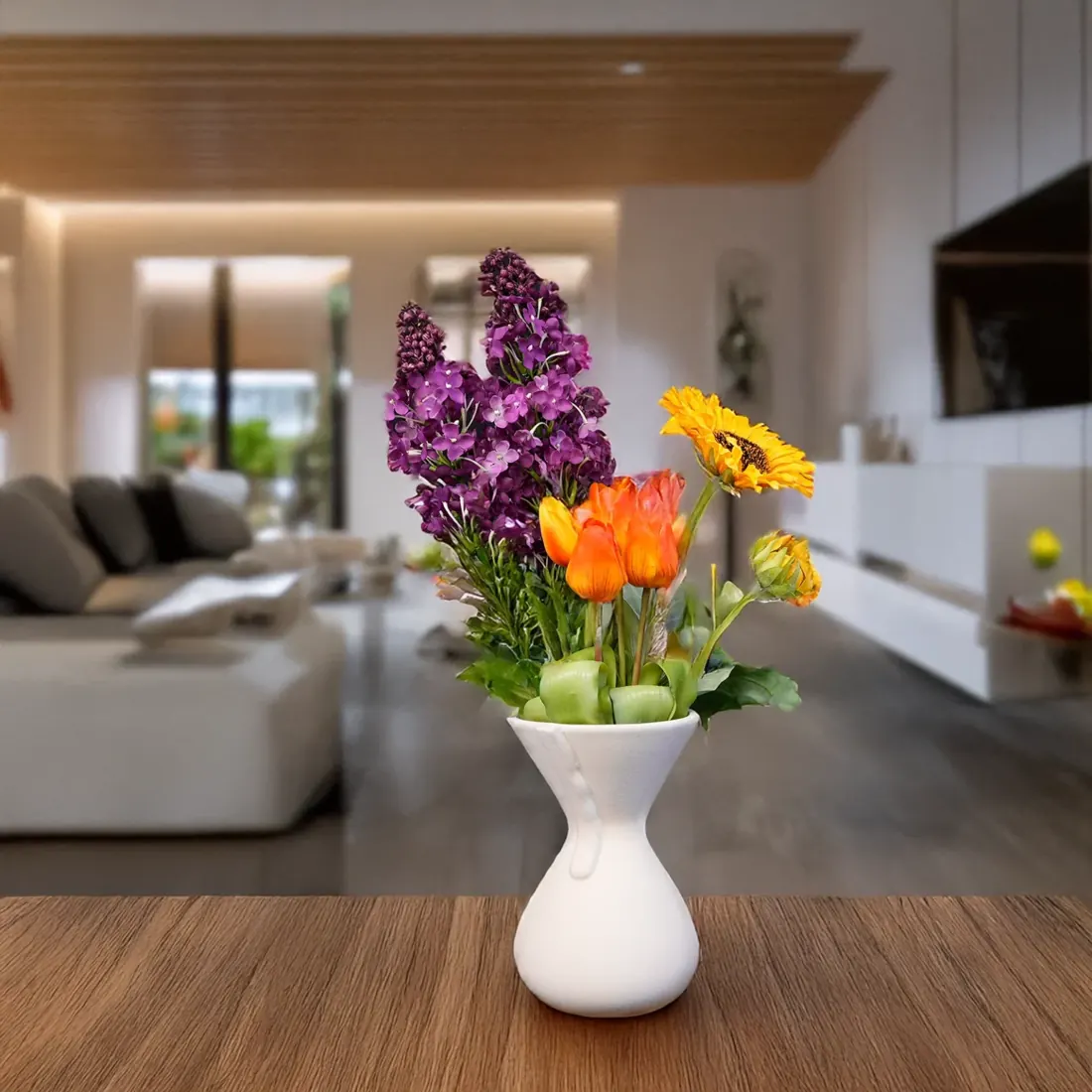
The Hecate porcelain vase, with a 13.5 cm opening and a height of 21 cm, is made for a bouquet that opens out beautifully. The Calliope set, with openings of 3 and 5.5 cm, is for a few carefully chosen stems. You'll find every shape, with the right flowers for each, in our guide to vase shapes.
Step 7: The white porcelain vase, the starting point
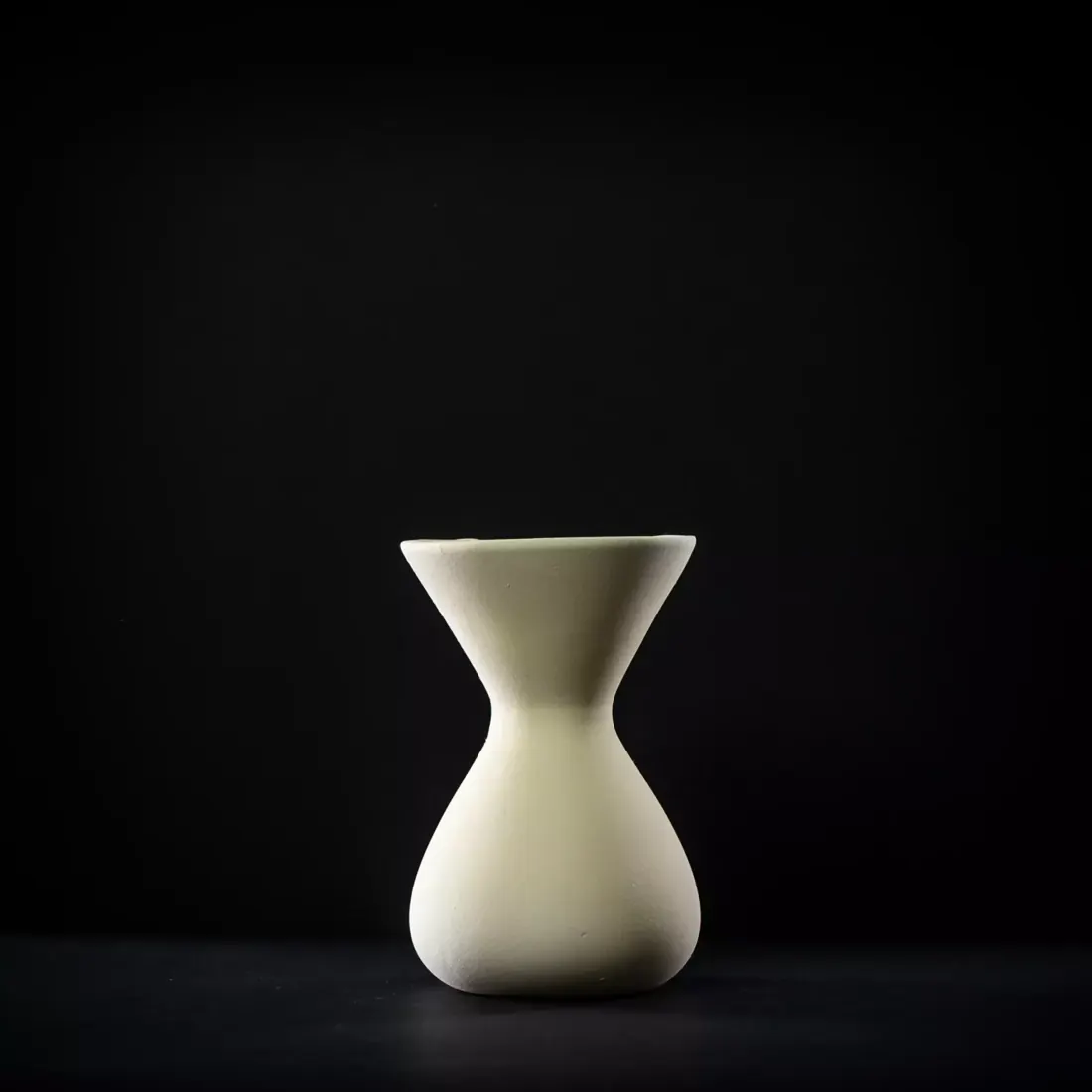
If you don't know where to start, start with a white porcelain vase. White porcelain goes with everything: warm wood, grey, green, the colours of your flowers. It reflects light and makes the room feel airier.
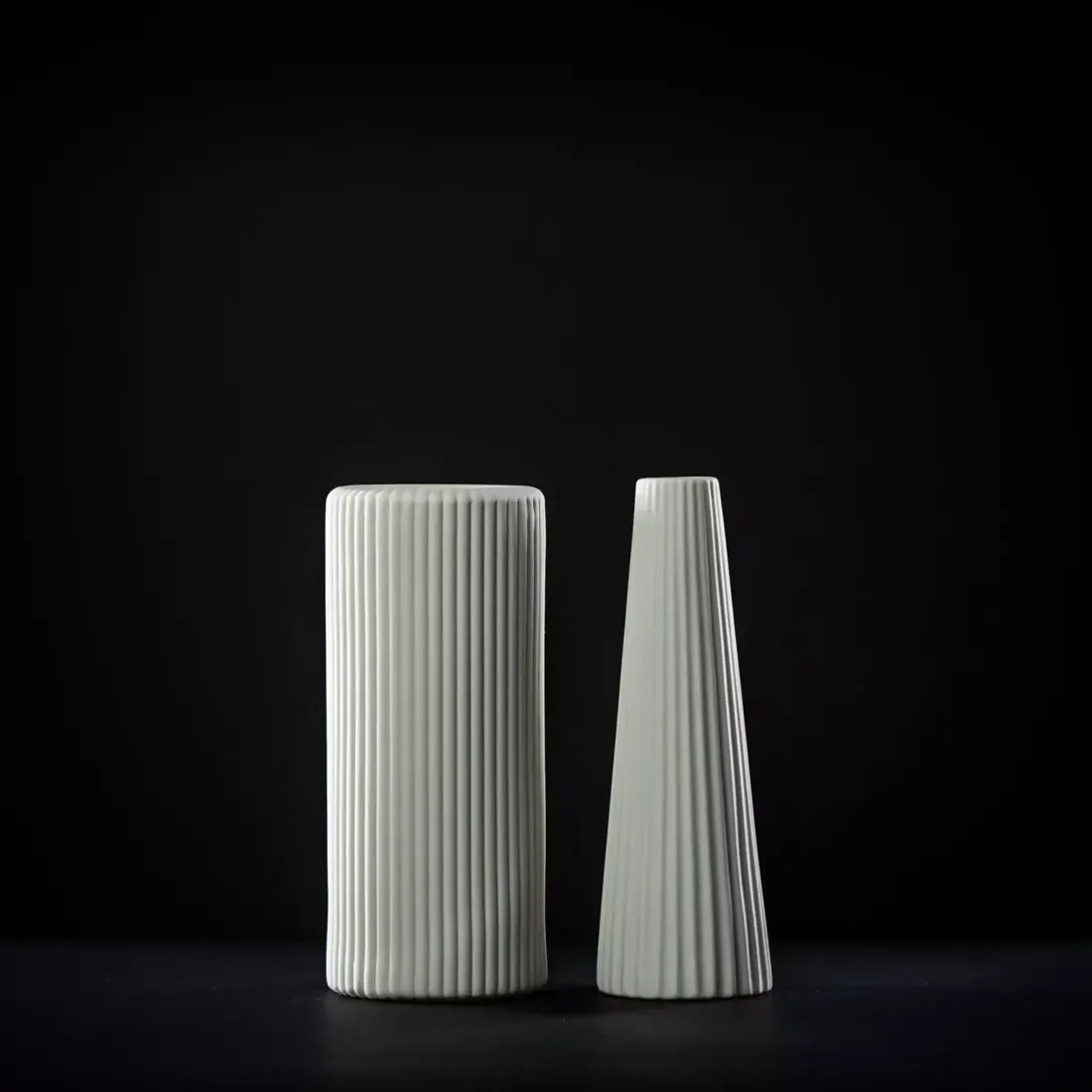
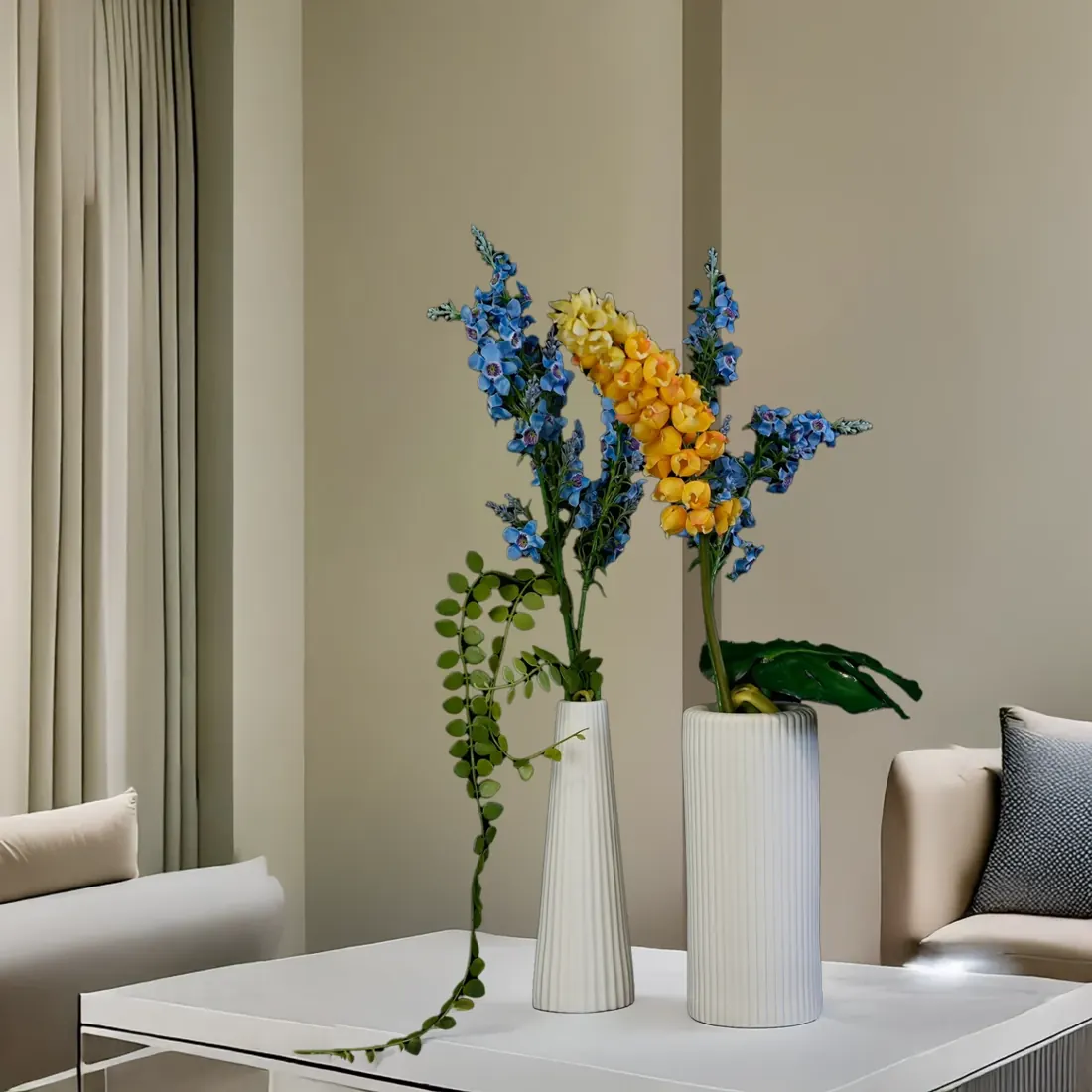
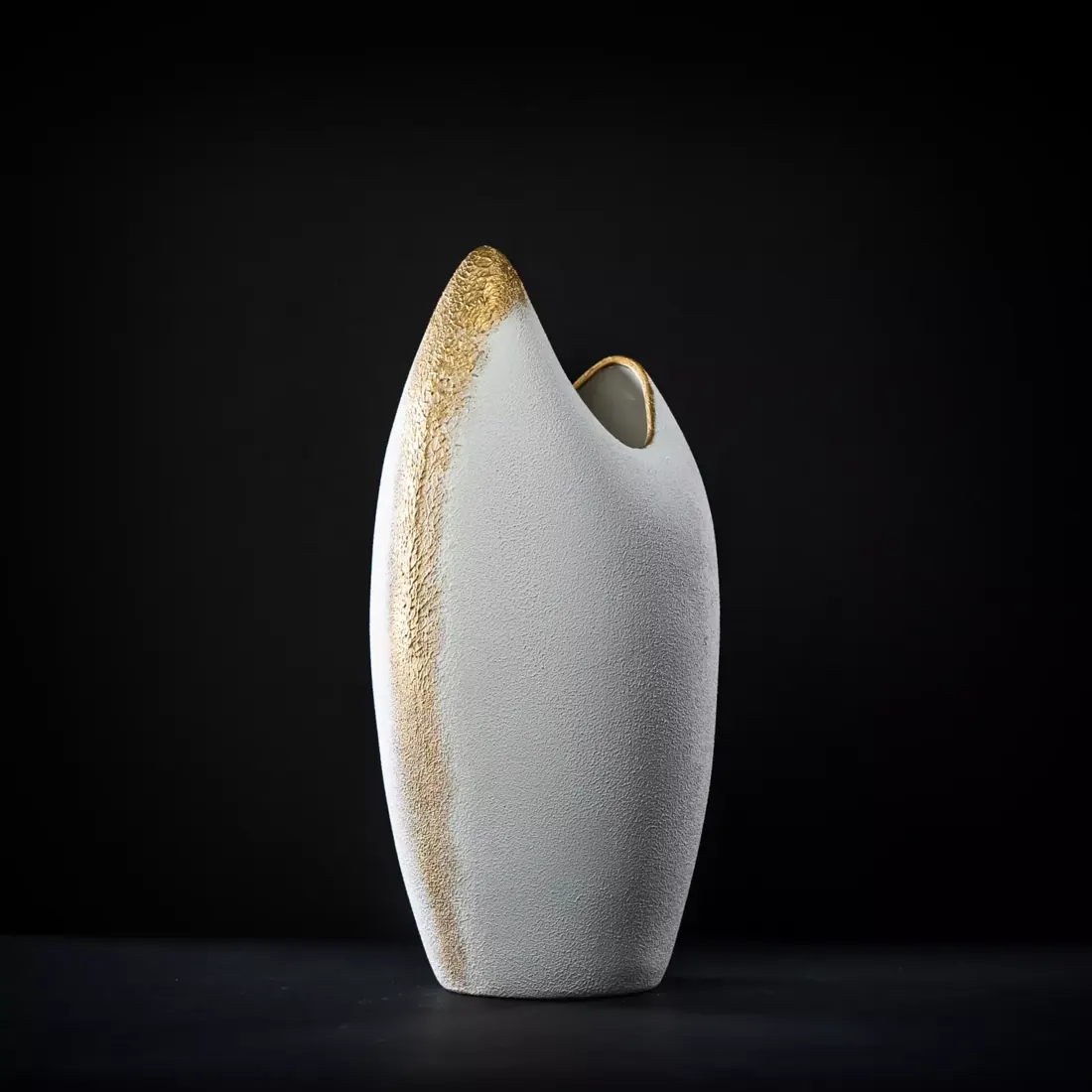
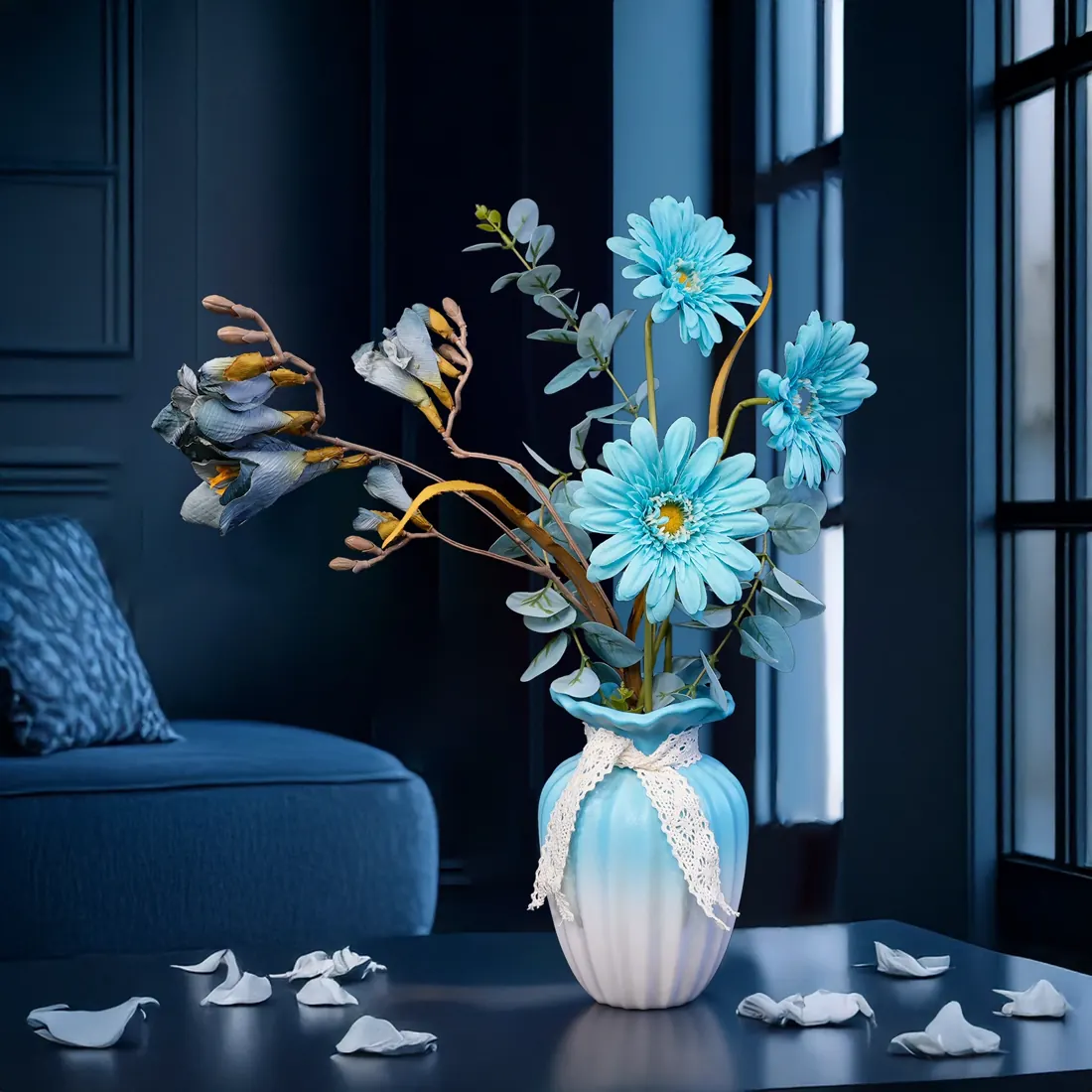
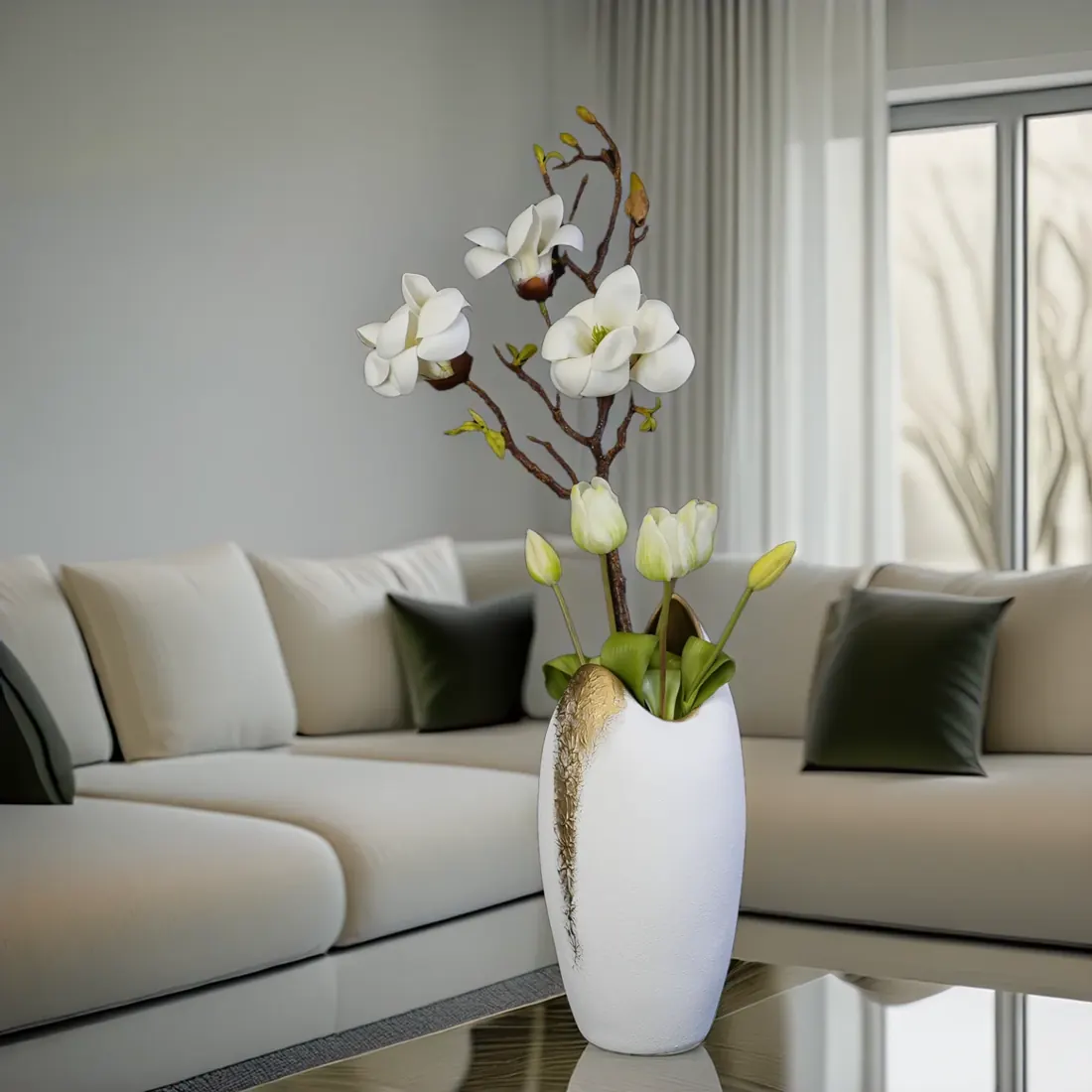
White has its shades too. A matt white is velvety and calm. A white with gold brings a warm, evening glow. The Nyx L vase, 35 cm tall, is white with gold leaf, and the Thalia set is all white, two vases of 21.5 and 25 cm that look lovely together.
Step 8: Sets or single pieces
A single vase is a statement. Two or three vases of different heights are a little story.
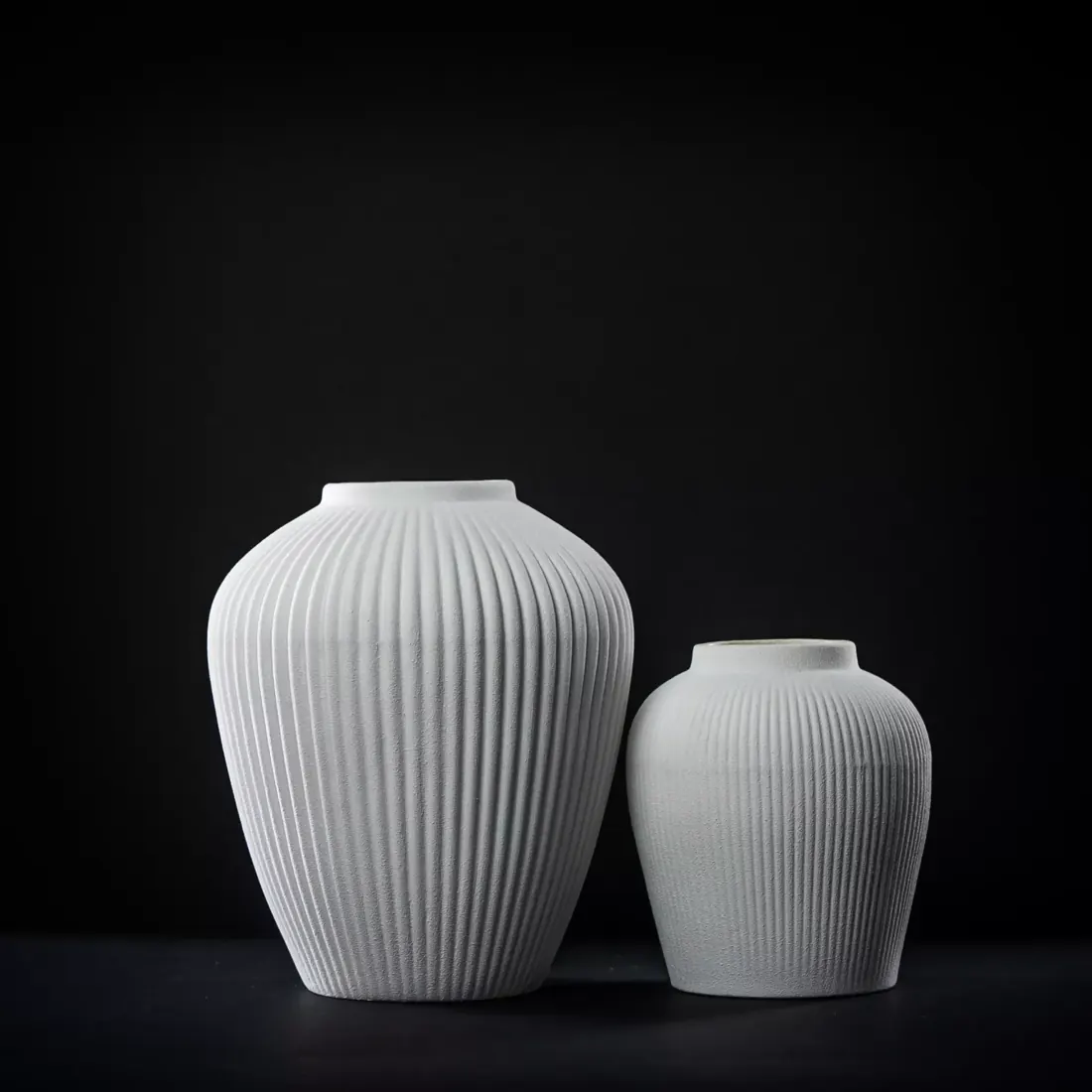
Sets take away the worry of matching. The shapes and colours are designed to go together. You can place them side by side, spread them around the home, fill them all or just one, leaving the other to be pure shape.
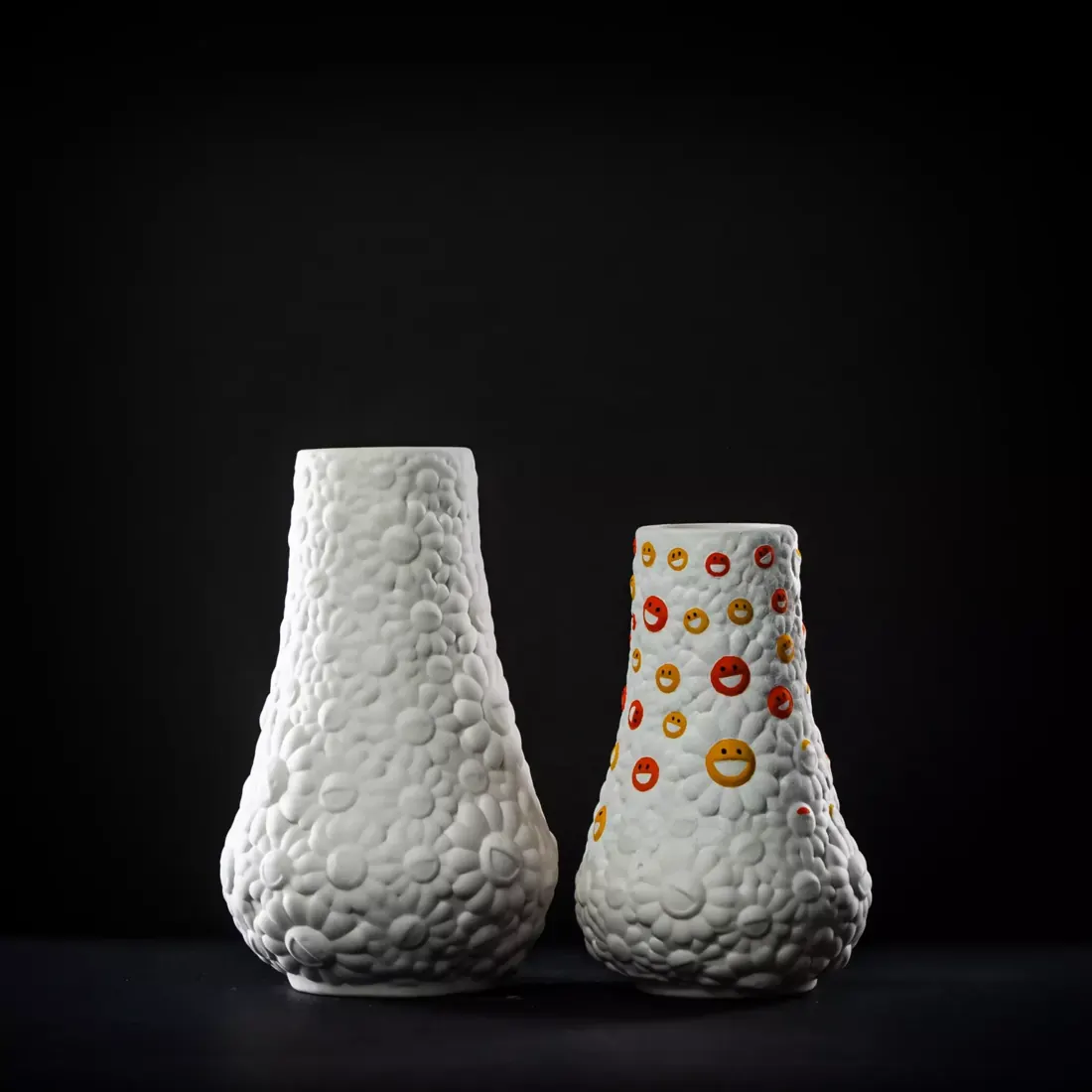
The Summer Wedding set has two vases, 23.5 and 16 cm tall, and comes in white, black, yellow, black with gold or white with gold. It's a good example of a set that works with both fresh flowers and artificial arrangements.
Step 9: A porcelain vase, a gift that lasts
Flowers fade. The vase stays. That's why a porcelain vase is a gift that says “I thought of you, for a long time to come”.
It suits a new home, a wedding, an anniversary, a thank-you. If you don't know the taste of the person receiving it, go for white or white with gold. And if you want to make the gift complete, put a few seasonal flowers in it. Give it just like that, with a handwritten note.
Step 10: How to care for a porcelain vase
Porcelain is durable, but it loves gentleness.
- Wash it with lukewarm water and a little mild washing-up liquid. For narrow necks, a soft brush with a long handle reaches where your hand can't.
- An old trick for narrow vases: add a handful of uncooked rice, a little water and a drop of washing-up liquid, then shake gently. The rice cleans the inside walls.
- No abrasive sponges, especially on gold details or matt surfaces.
- Avoid sudden temperature changes. Don't pour boiling water into a cold vase, and don't leave it in the cold and then put it straight next to a radiator.
- Change the flower water often. That way no marks build up inside and the flowers last longer. We have a whole guide on this: how to keep flowers fresh in a vase.
Frequently asked questions
How do you tell porcelain from ceramic?
Look at the base of the vase, where there's no glaze. Porcelain has a white, fine, hard body, while ordinary ceramic often has a coloured, rougher body. You can also listen: porcelain rings clearly when you tap it lightly with a fingernail. Where the walls are thin, porcelain also lets light through slightly.
Do porcelain vases hold water?
Yes. Porcelain vitrifies during firing, so it's very slightly porous, and the glaze makes it even more watertight. That's why it suits fresh flowers. Change the water often and dry the vase after emptying it so it stays clean.
Can porcelain vases go in the dishwasher?
Washing by hand is the gentlest option and the one we recommend. Gold details and matt surfaces can wear over time with strong detergents. For narrow necks, use a soft brush or the rice-and-water trick.
How can you tell if an old porcelain vase is valuable?
The first clue is the mark on the base, which shows the manufacturer. Then the age, condition and rarity of the piece matter. Because marks have often been copied, an assessment by an experienced antiques dealer or valuer is the safest answer.
Which porcelain vase should you start with?
A white, medium-height vase, between 20 and 30 cm, with an opening that takes an ordinary bouquet. It suits almost any room and almost any flowers. Then you can add a taller piece or a set as you discover your style.
Where can I buy porcelain vases in Bucharest?
You'll find them online, in our shop, and you can see them in person at our showroom at Str. Johannes Kepler 69, Sector 2, Bucharest. Delivery in Romania is free on orders over 500 RON; otherwise it costs 24 RON (29 RON with cash on delivery). You also have 14 days to return them.
If a shape, a colour or just a feeling has stayed with you, come and look for it among our porcelain vases and vase sets. Take your time. The right vase is easy to recognise, usually at first sight.