Guide · 9 minute read
Ikebana: what it is, what it means and how to bring it home with a single vase
What ikebana is, what it means and how to make a calm arrangement at home with a simple vase and three stems.
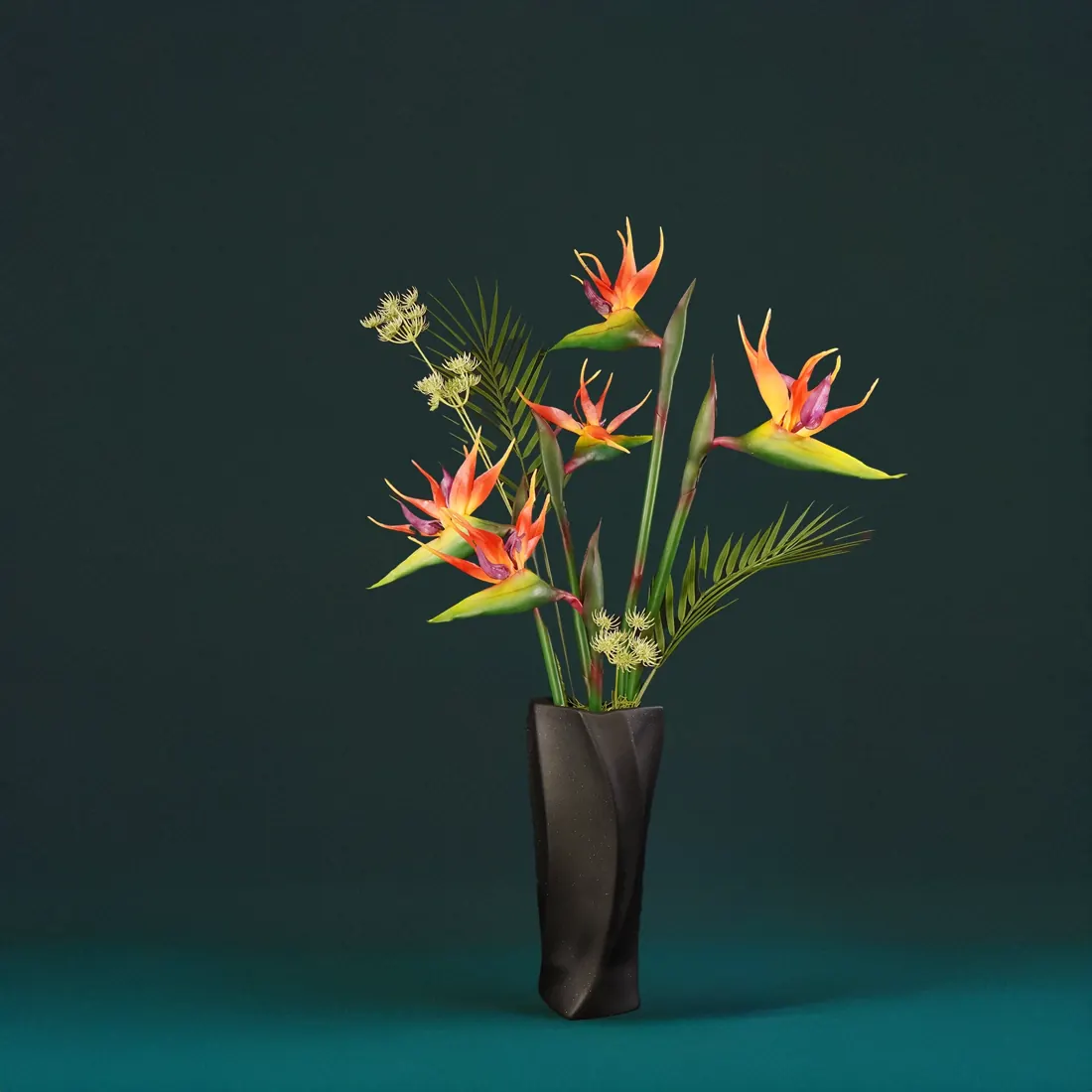
Ikebana is the Japanese art of arranging flowers. It doesn't gather as many flowers as possible into a bouquet. It chooses a few, gives them space and lets each stem show its line. All you need is a simple vase, a few branches and a little patience to try it today, on your own table.
Below you'll find what ikebana means, the principles it rests on and how to make your first arrangement at home, step by step.
Ikebana: what it is
Ikebana was born in Japan, from the custom of placing flowers as offerings in Buddhist temples. Over the centuries it became an art in its own right, with schools, masters and rules of its own. The first known school, Ikenobo, has its roots in the 15th century and still exists today.
What makes it different from an ordinary bouquet? The way of looking. In a Western bouquet, the flowers fill the vase and you mostly see the blooms. In ikebana, the stem, the leaf, the bare branch and the empty space between them matter just as much. An ikebana arrangement reads like a drawing: it has direction, breath and stillness.
Ikebana is considered one of Japan's classical arts of refinement, alongside the tea ceremony. Both teach the same thing. To slow down. To pay attention to a single gesture.
Ikebana: what the word means
The word comes from Japanese and translates, in short, as “living flowers” or “giving life to flowers”. The first part comes from the verb meaning “to live, to make live”, and the second from “hana”, flower.
Many also call it “kadō”, the way of flowers. The name says a lot. It isn't just a decorating technique. It's a way of looking at nature and making room for it in your home.
The principles of ikebana
You don't need to know all the rules of a school to enjoy ikebana. A few simple principles make almost all the difference.
Little, but chosen with care
An ikebana arrangement usually uses few elements. A branch, two flowers, a leaf. Each one has a role. If you take one away and the composition loses nothing, it wasn't needed.
Line
Line is the backbone of the arrangement. A gently curved branch, a tall, straight stem, a leaf that bends. The eye follows these lines like a movement.
Empty space
The space between elements is part of the arrangement. It lets each flower breathe and be seen. If you feel the urge to fill a space, leave it for a while and look at it again.
Asymmetry
Ikebana avoids perfect symmetry. The elements have different heights and lean in different directions. Balance comes from proportion, not from mirroring.
Three levels
Many styles start from three main elements of different heights. The tallest gives the direction. The second accompanies it. The third, the shortest, ties everything to the vase. They are sometimes associated with heaven, human and earth.
The season
Ikebana follows nature. Spring brings flowering branches and tulips. Summer, generous leaves and full flowers. Autumn, coloured branches, chrysanthemums, dried grasses. Winter, conifer branches, bare twigs, a single camellia. You choose what you find around you, in season.
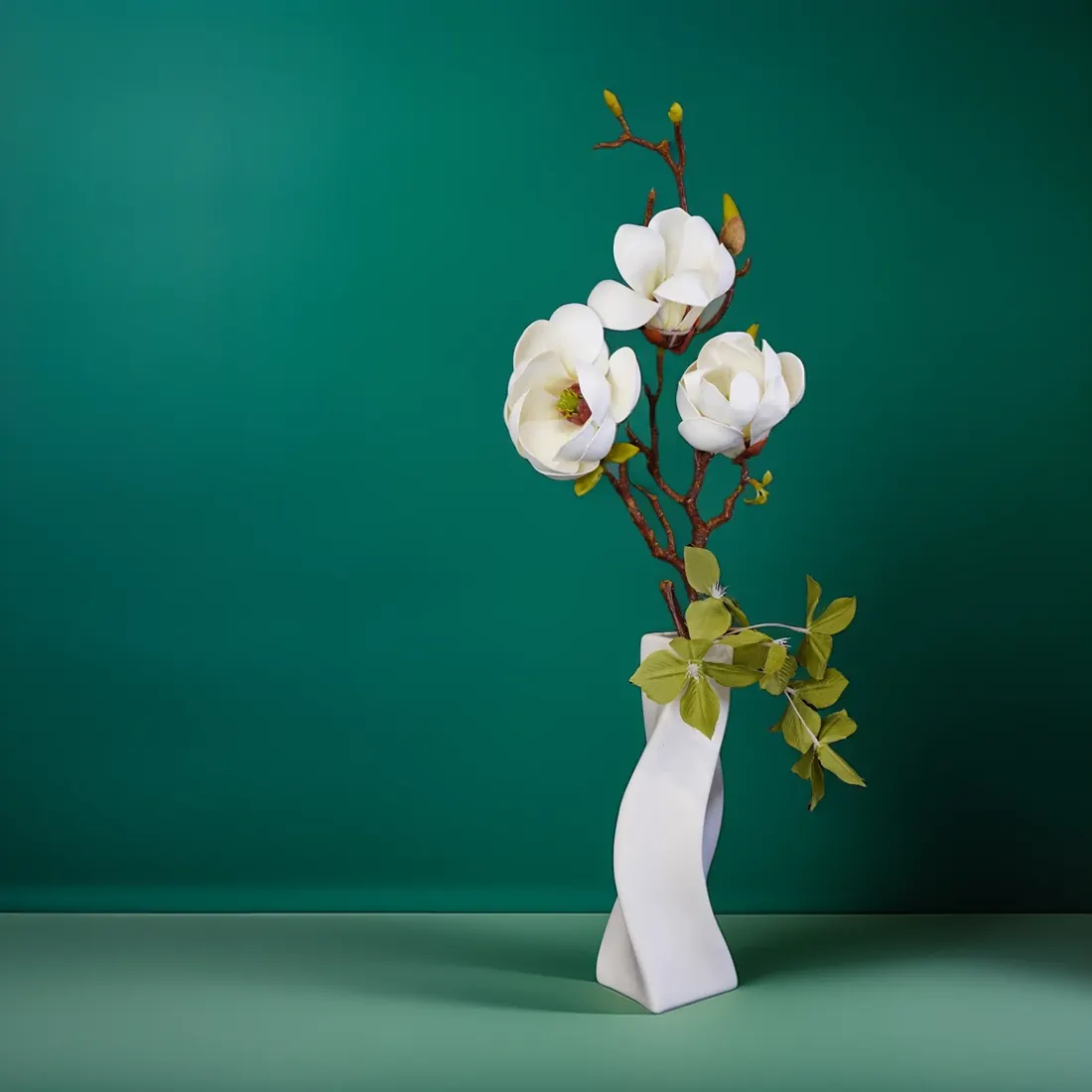
The main styles of ikebana
There are many schools of ikebana, each with its own vision. A few styles are well known and help you understand what you're looking at.
- Rikka. One of the oldest and most formal styles. Large, carefully built arrangements meant to be viewed from the front.
- Shoka. A simpler form, with three main elements that seem to grow from the same point.
- Nageire. It means, roughly, “thrown in”. The flowers are placed in a tall, narrow-mouthed vase and look naturally set, without effort. It's the style closest to what you can do at home with an ordinary vase.
- Moribana. A newer style that appeared around 1900. The flowers are fixed in a wide, low dish, usually on a kenzan, and create a small landscape.
- Jiyūka. The free, modern style, in which rules become starting points, not limits.
If you're just starting out, nageire is the gentlest way in. You don't need special tools. Just the right vase and a few beautiful stems.
Ikebana at home, with a single vase
Here's the lovely part. You don't need a whole set of Japanese tools to start. A single, well-chosen vase does half the work.
Which vase to choose for ikebana
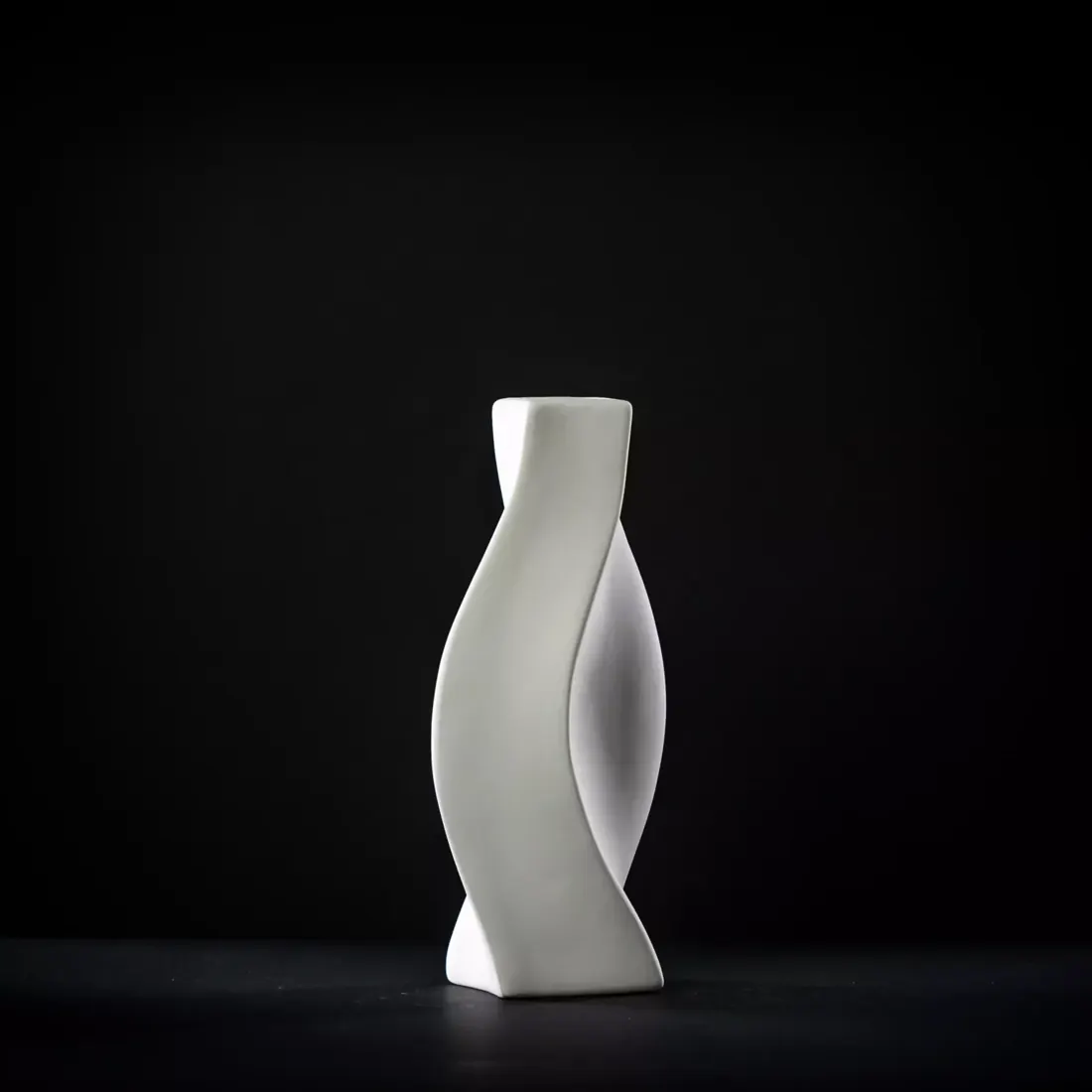
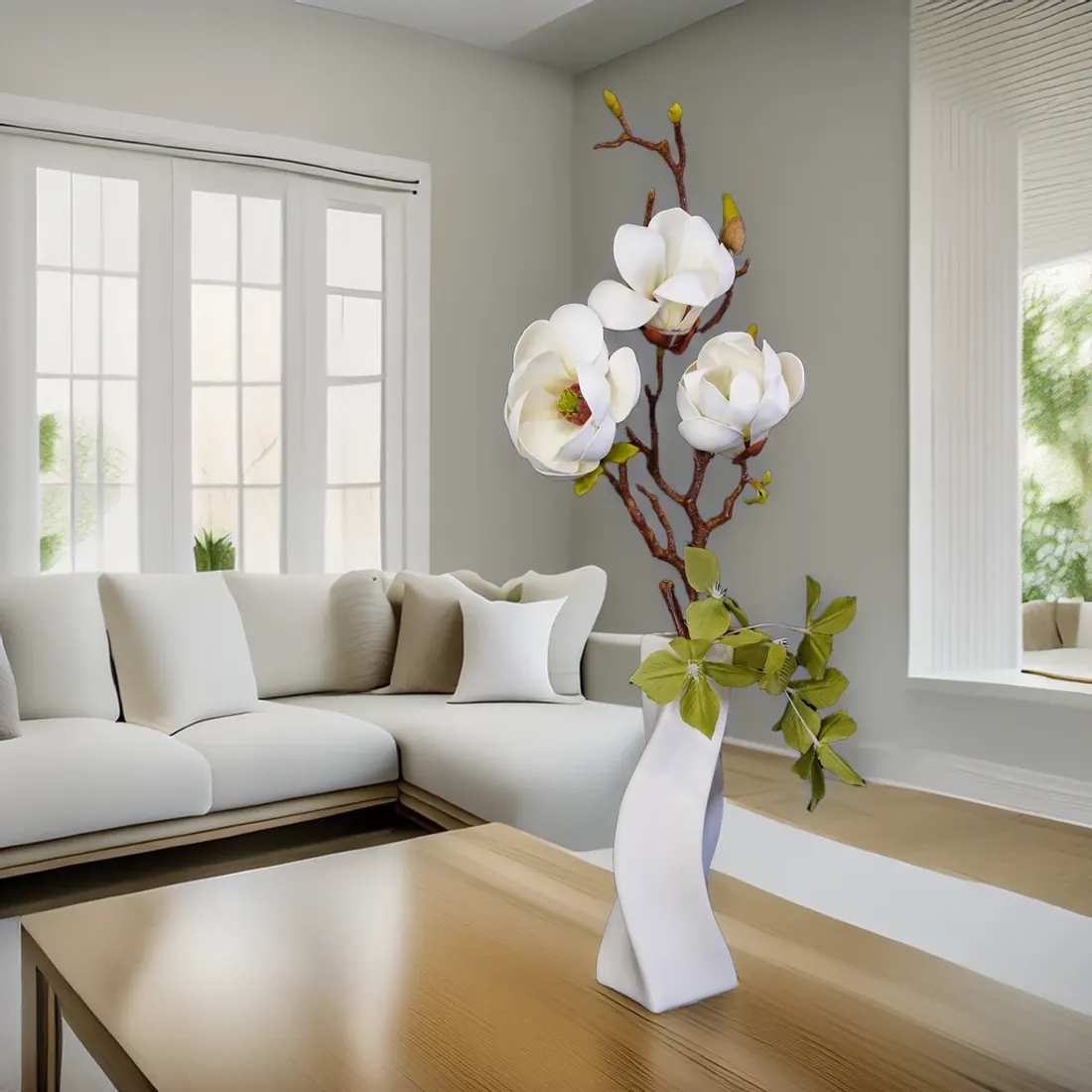
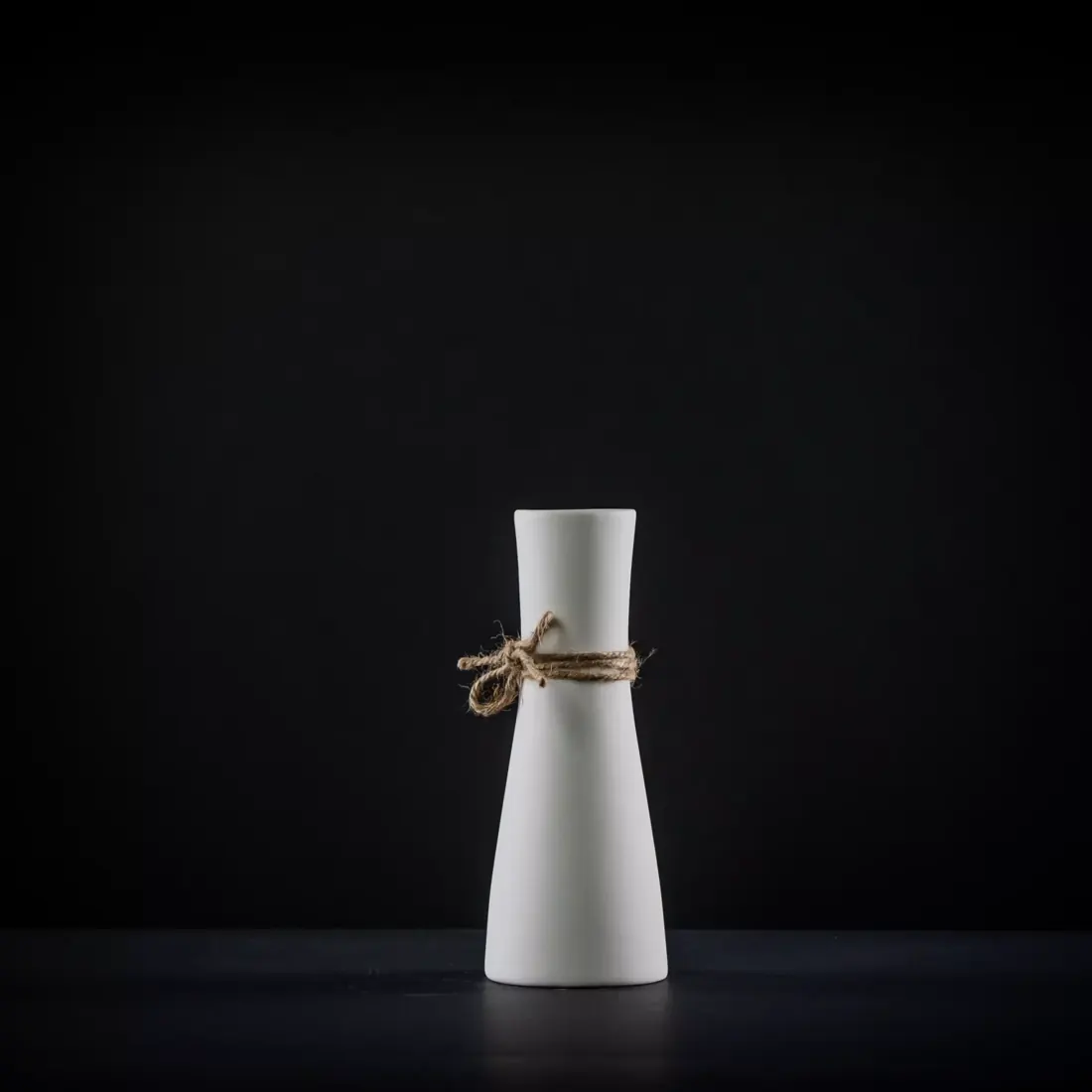
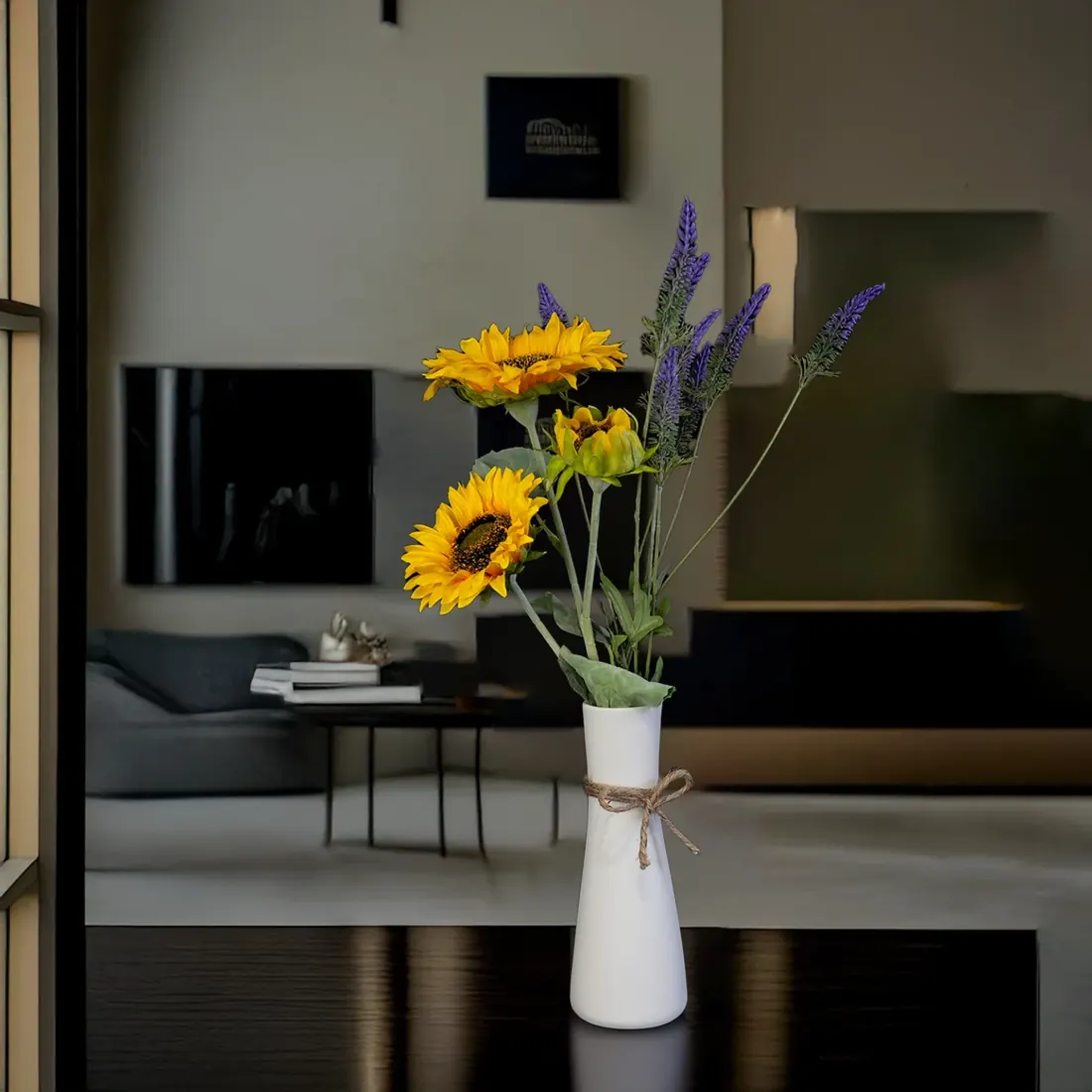
For the nageire style, the best choice is a tall vase with a narrow mouth. The narrow neck holds the stems in position, without wire or foam. You can lean them against each other and against the rim of the vase, and they stay where you put them.
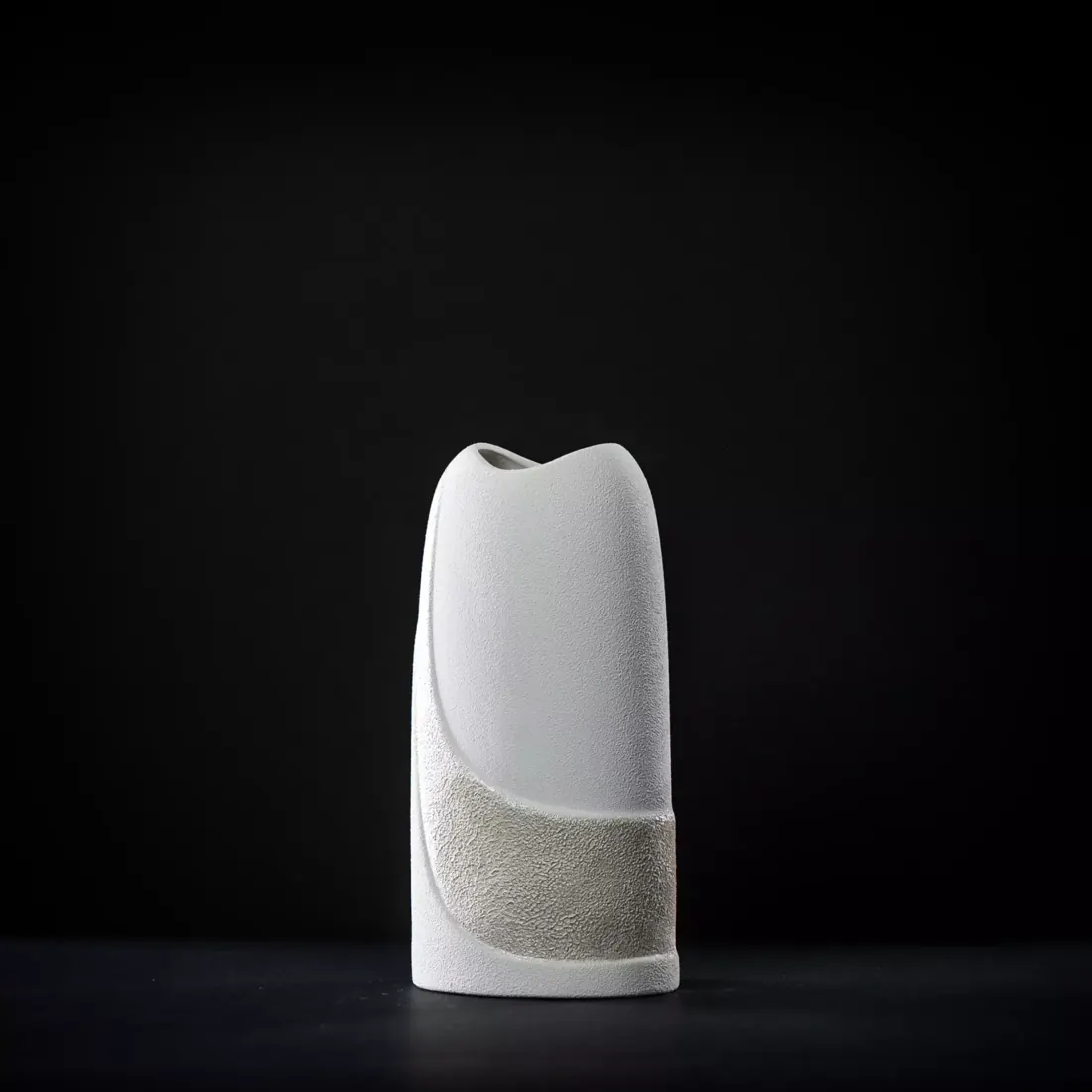
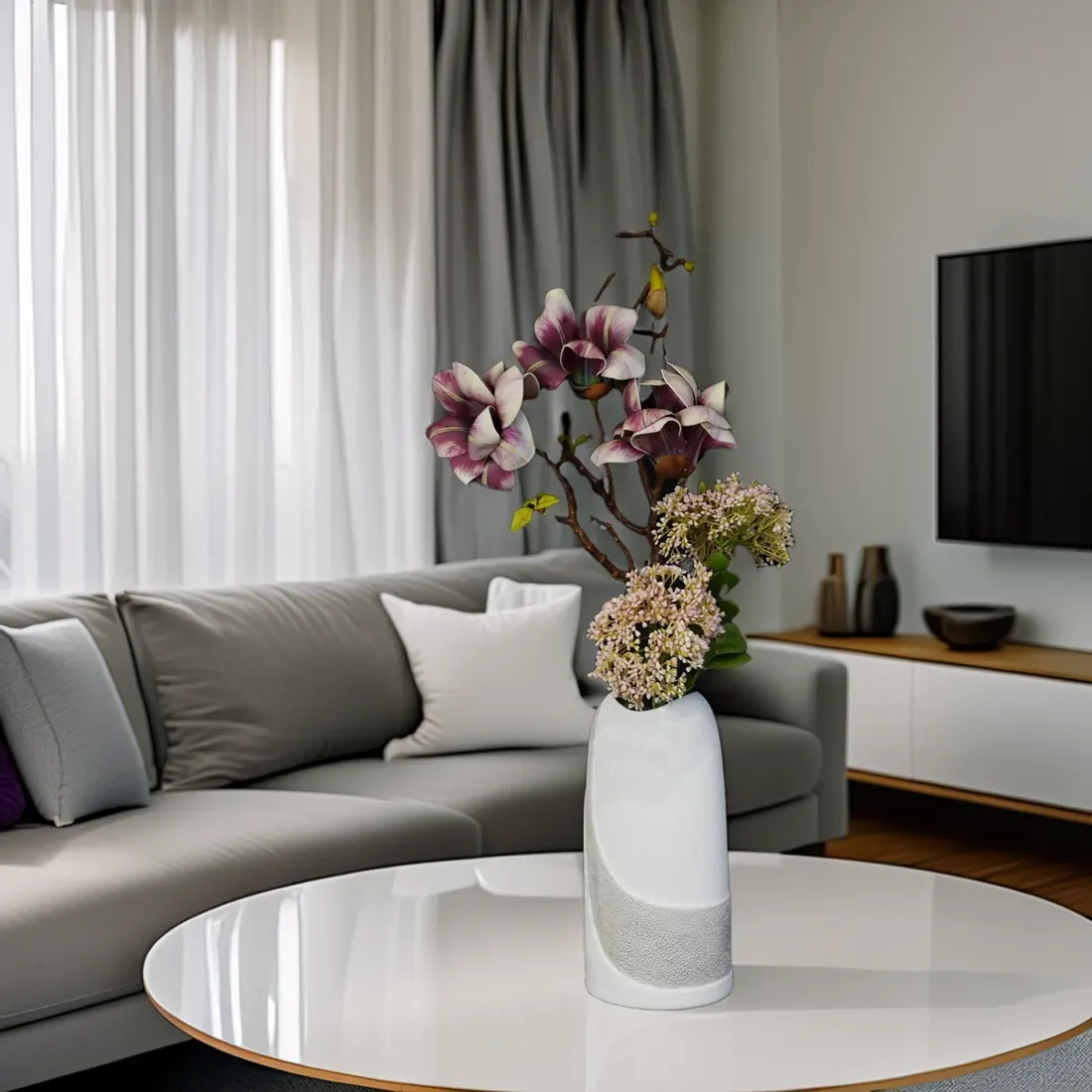
Colour matters too. A plain white vase steps back and lets the flowers speak. A dark vase makes pale stems stand out.
A few porcelain vases from our collection that work well:
- The Luna vase, white, 27 cm tall, with a 4.5 cm opening. It holds a single branch or two stems beautifully.
- The Clytie A vase, in white and metallic white, 25 cm, with a 6 cm opening.
- The Flora vase, white, 22 cm, with a 5.5 cm opening, for small arrangements on a bedside table or a shelf.
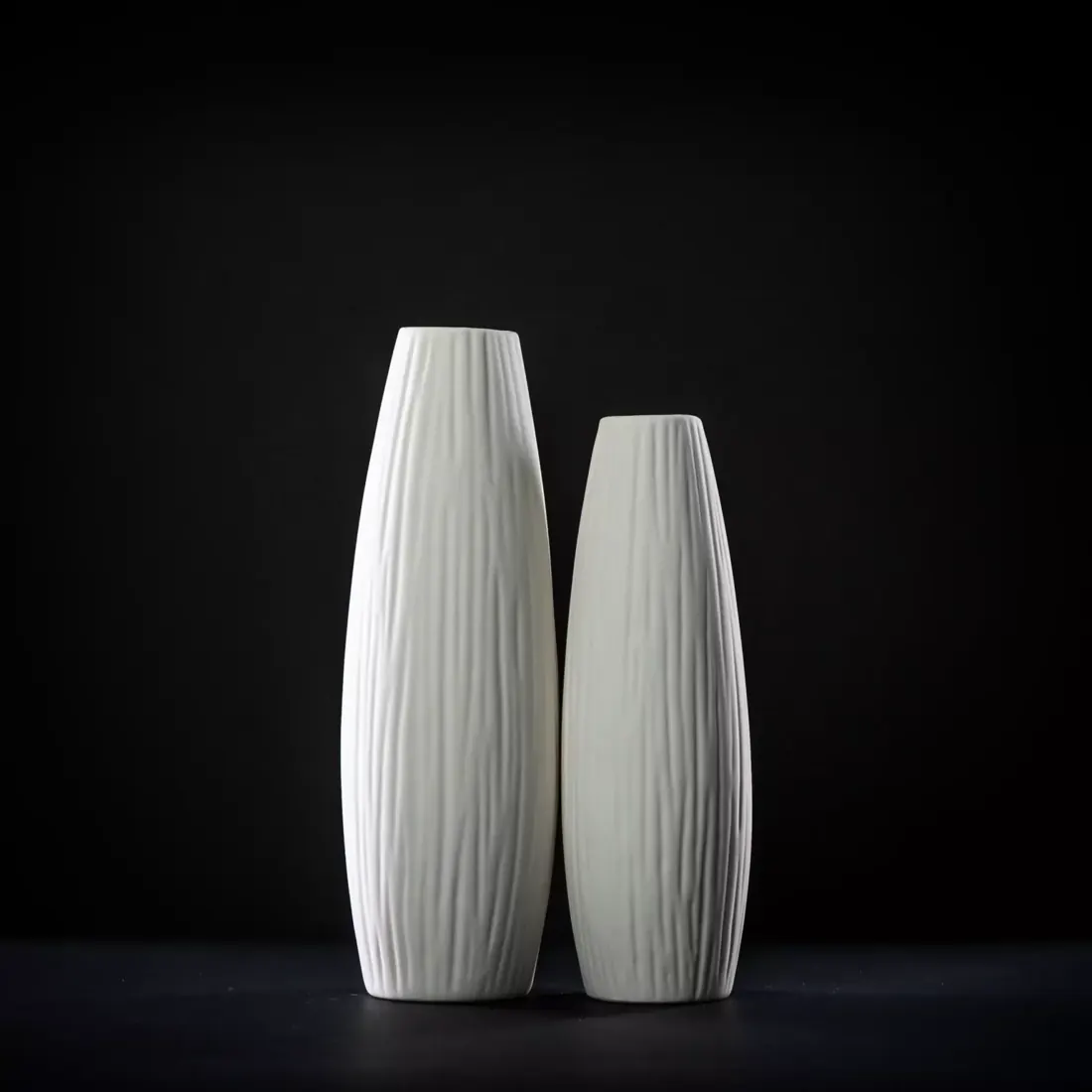
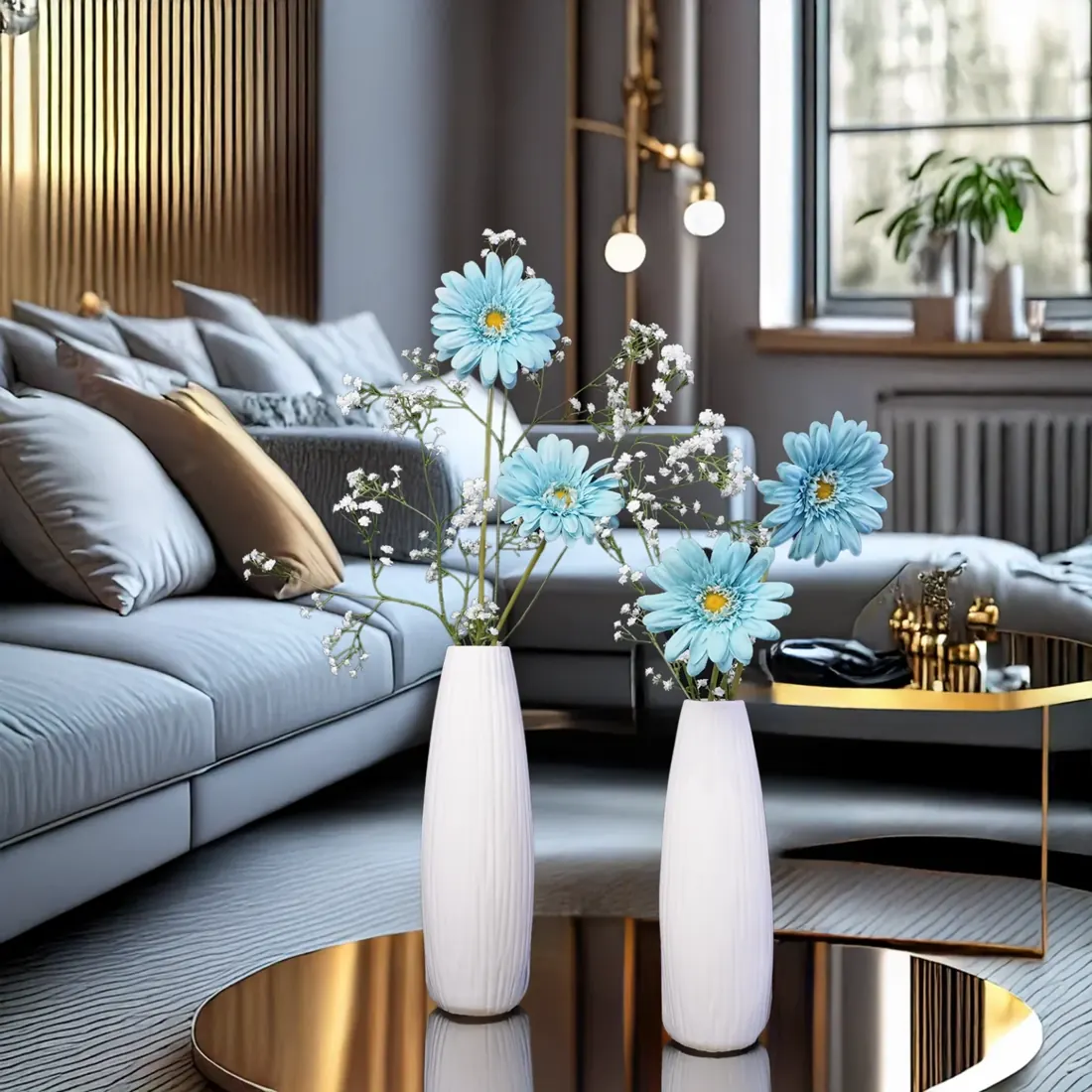
- The Nike set, two white narrow-mouthed vases, if you want to make two compositions that talk to each other.
If you'd like to understand better how to choose the vase shape to suit the flowers, there's a separate guide to vase shapes.
Which flowers for ikebana
In ikebana, flowers aren't the only thing that counts. Any living material that draws you in has its place. A few ideas that are easy to find:
- Branches: flowering cherry, apple or cherry plum in spring, willow, eucalyptus, maple branches in autumn.
- Flowers with a beautiful line: tulips, irises, calla lilies, lilies, orchids.
- Flowers with presence: chrysanthemums, peonies, anemones, a single hydrangea.
- Greenery: aspidistra leaves, tall grasses, ferns.
Don't buy a lot. Three elements are enough to start with.
How to make your first ikebana arrangement, step by step
- Choose your spot. Where will the arrangement sit? On a low table, on a shelf, by the window? Think about which side you'll look at it from.
- Prepare the vase. Wash it well and fill it about halfway with fresh water.
- Choose three elements. A long branch, a medium-height flower, something small and low, a leaf or a short flower.
- Place the tallest element first. As a guide, the main branch can be one and a half to two times the height of the vase. Tilt it slightly; don't stand it straight.
- Add the second element. About two thirds the height of the first, leaning in another direction.
- Place the last element low, close to the mouth of the vase. It ties the composition to the vase.
- Tidy up. Remove leaves that weigh it down and twigs that cross each other. Let the gaps be.
- Take a step back. Look. If something bothers you, take away rather than add.
Cut the stems at an angle with sharp scissors so they drink more easily. Remove any leaves that would sit in the water so it stays clean for longer. If you want the arrangement to last as long as possible, you'll find all the tips in our guide on how to keep flowers fresh in a vase.
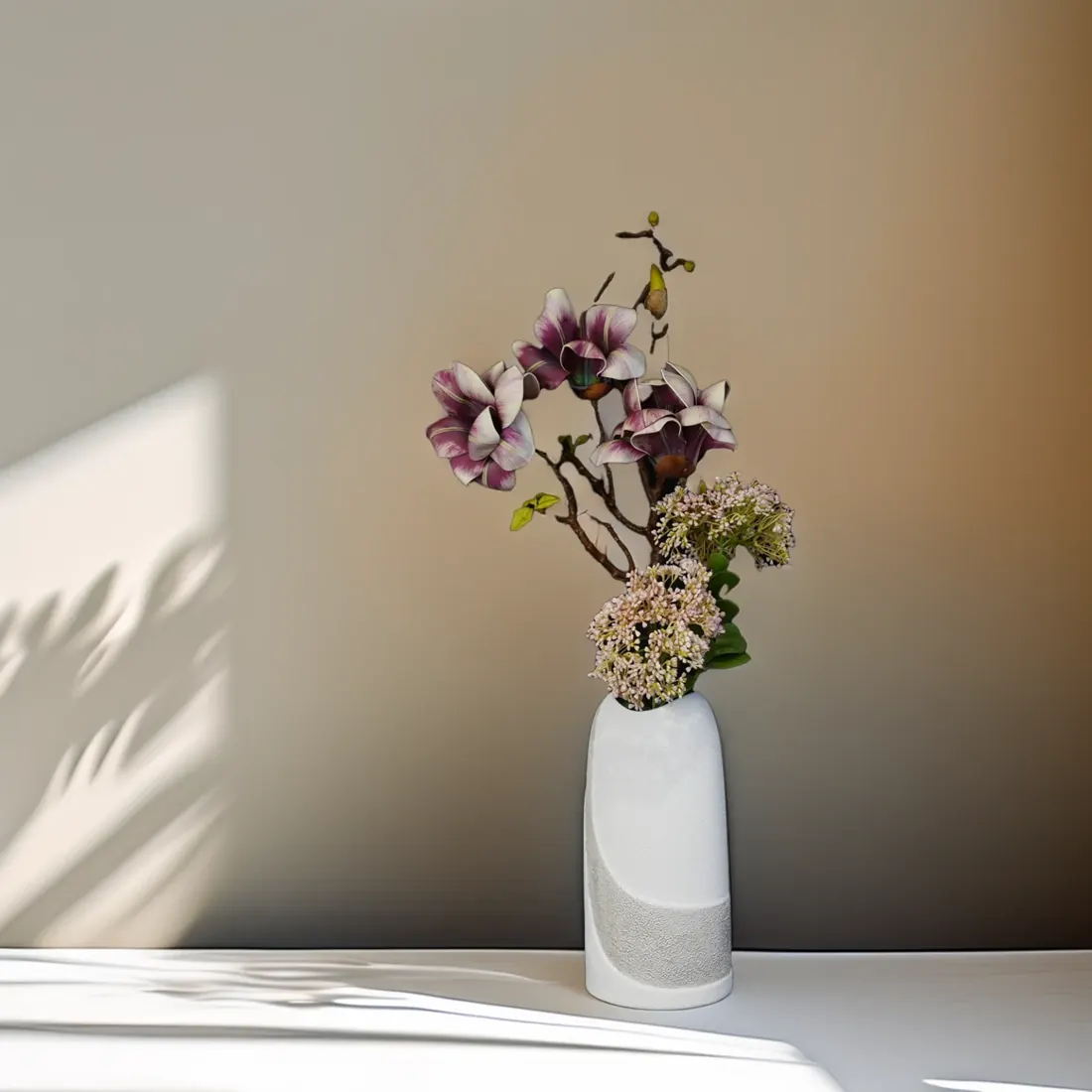
Common beginner mistakes
- Too many flowers. It's the most natural temptation. Ikebana asks you to stop sooner.
- Everything at the same height. Without different levels, the arrangement looks like a cut-down bouquet.
- Symmetry. Two identical flowers, one on each side, stop the movement.
- Forgetting the vase. The vase is part of the composition. Choose it as carefully as the flowers.
- Rushing. Your first arrangement might take an hour. And that's fine.
Ikebana tools, if you want to go further
Once you've caught the bug, you can add a few tools:
- Ikebana scissors, with short, strong blades that cut cleanly even through thicker branches.
- The kenzan, a heavy holder with dense metal pins, on which you fix the stems in a wide dish. It's the basic tool for the moribana style.
- A wide, low dish, for landscape-style compositions.
To begin with, though, a narrow-mouthed vase is all you need. And it lets you focus on what matters: line, space, stillness.
Why ikebana is worth trying
Ikebana slows time down. While you choose a branch, turn it, cut it and place it, the thoughts of the day settle. Your hands work, your eyes learn to see. A bent leaf becomes interesting. A bare twig becomes beautiful.
And the result stays with you for a few days. A corner of the home that breathes differently. One you look at in the morning, over coffee.
Frequently asked questions
What is ikebana, in short?
Ikebana is the Japanese art of arranging flowers. It uses few elements and focuses on line, asymmetry and the empty space between the flowers. The aim isn't abundance but harmony and calm.
What does ikebana mean?
The word translates roughly as “living flowers” or “giving life to flowers”. It is also called “kadō”, the way of flowers. The name shows that ikebana is seen as a practice, not just as decoration.
Can I do ikebana without a kenzan?
Yes. The nageire style is done in a tall, narrow-mouthed vase, without a kenzan. The neck of the vase holds the stems in position and you lean them against each other. A kenzan only becomes useful when you work in wide, low dishes.
Which vase is good for ikebana at home?
A simple vase without much decoration, with a narrow mouth and 20 to 30 centimetres tall, is a very good start. A white one or one in a discreet colour puts the flowers centre stage. A wide, low dish suits the moribana style, with a kenzan.
Can I use artificial flowers for ikebana?
Traditional ikebana works with living material and its passing over time. At home, though, the principles of composition apply just as well to good-quality dried or artificial flowers. Line, space and asymmetry stay the same.
How many flowers should I use in an ikebana arrangement?
There's no fixed number, but less is almost always better. To start with, try three elements of different heights. As you gain confidence, you can work with a single branch.
If you'd like to make room for your first arrangement, take a look through our porcelain vases and vase sets. Or drop by our showroom at Str. Johannes Kepler 69, Sector 2, Bucharest, to hold them in your hands and see which one suits you.