Guide · 9 minute read
Succulent care: a simple guide for indoor succulents
Light, a little water and the right pot: everything you need for your succulents to grow beautifully indoors.
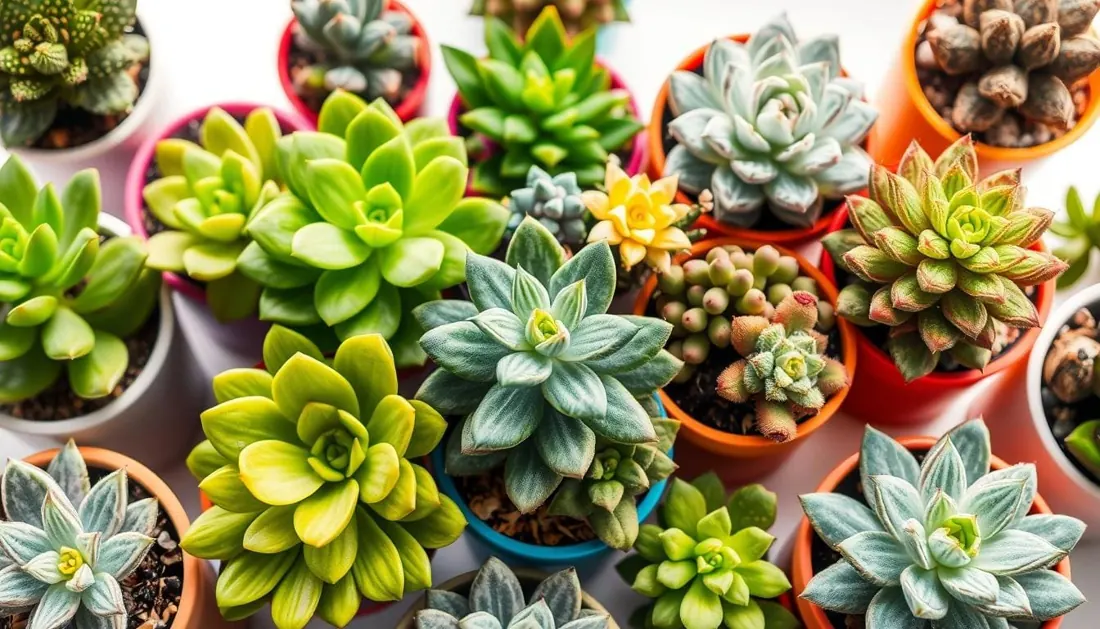
Succulent care rests on three things: plenty of light, little water and soil that doesn't hold moisture. Water rarely but thoroughly, and let the soil dry out completely between waterings. Keep them as close to the window as you can. The rest is patience and the pleasure of watching them grow.
Below you'll find everything you need to keep your indoor succulents healthy, from watering and light to winter, pots and wedding favours.
What succulents are
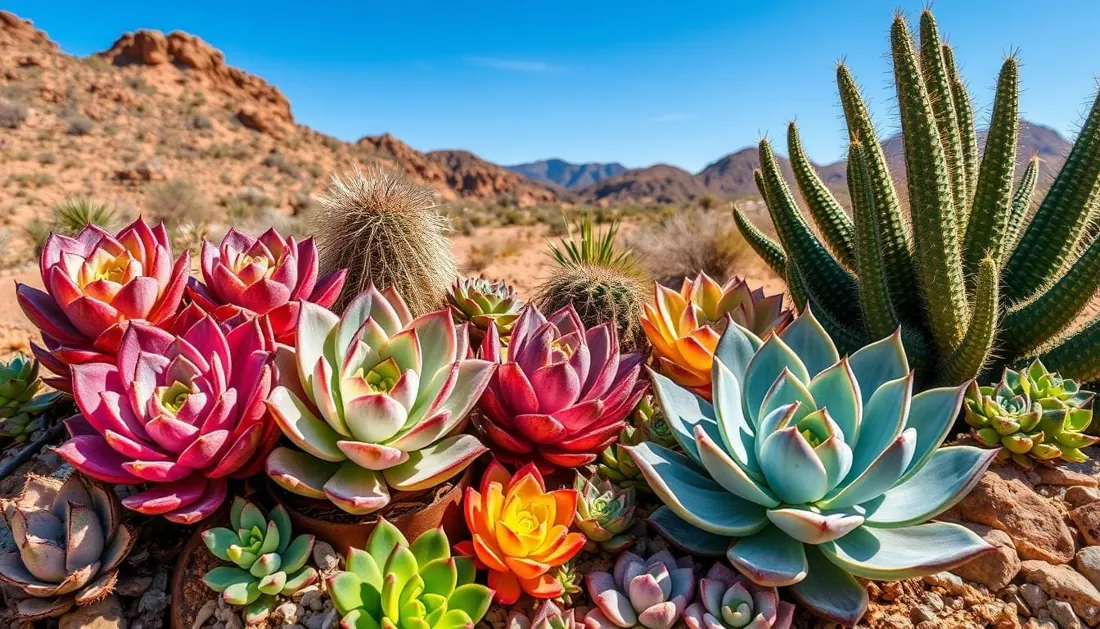
Succulents are plants that store water in their leaves, stems or roots. That's why they have thick, fleshy leaves, often covered in a waxy layer. They come from places with long dry spells and have adapted to live on little.
Cacti are succulents too. But the family is much wider: delicate rosettes, stems that spill over the pot, leaves like beads, shapes that look carved.
Succulent care: the basic rules
Light
Succulents love light. In a flat, the best spot is the sill of a bright window facing south, east or west. Many of them also enjoy a few hours of direct sun.
How can you tell they're not getting enough light? The plant stretches, leans towards the window and the leaves spread out along the stem. The compact rosette “unravels”. Move it closer to the light and turn the pot from time to time so it grows straight.
If you move it suddenly from shade into strong sun, the leaves can scorch. Make the change gradually, over a few days.
Watering
This is where most of us go wrong. And we go wrong out of too much care.
The simple rule: water generously, then let the soil dry out completely. Only then water again. Don't give it a little splash every day. The roots stay wet and the plant doesn't benefit from the water.
- Check the soil with your finger, a few centimetres deep. If it's dry, it's time.
- In spring and summer, when they're growing, they may need water once a week or every two weeks, depending on the heat, the light and the size of the pot.
- Let the excess water drain away. Don't leave the pot standing in water in its saucer.
- Water the soil, not the rosette. Water left between the leaves can lead to rot.
Soil
Succulents need airy soil that lets water through quickly. The simplest choice is a special cactus and succulent compost. You can make it drain even better by mixing in perlite, fine gravel or coarse sand.
Ordinary multi-purpose compost, used on its own, holds too much water for them.
Feeding
Succulents don't need much feeding. In spring and summer you can use a diluted cactus fertiliser once a month. In late autumn and winter, don't feed them at all.
Indoor succulents: which ones do best in a flat
Some succulents feel more at home indoors than others. A few good choices to start with:
- Haworthia. Small, with striped leaves or leaves with translucent tips. It copes with less light than other succulents.
- Crassula ovata, known as the “jade plant” or “money tree”. Tough, with glossy leaves, it slowly grows into a little tree.
- Sansevieria, “mother-in-law's tongue”. It tolerates lower light and infrequent watering.
- Aloe. Long, fleshy leaves. It loves strong light.
- Echeveria. Rosettes in shades of green, bluish, pink or purple. It needs a lot of light to keep its shape and colour.
- Kalanchoe. It flowers generously in bright colours and is easy to find.
- Sedum morganianum, “donkey's tail”. Stems that spill over the pot, lovely on a high shelf.
If you have cats or dogs that chew plants, check before you buy. Some succulents, including aloe, crassula and kalanchoe, are not suitable for pets.
Succulent care in a flat: common problems
Soft, translucent or blackened leaves
This is almost always a sign of too much water. Stop watering and let the soil dry out completely. If the base of the stem is soft and dark, the roots have rotted. You can save the plant by cutting off a healthy part and letting it dry for a few days before putting it in dry soil.
Wrinkled leaves
It may be thirst. But if the soil is wet and the leaves are still wrinkled, the problem is the roots, which can no longer take up water. Check the soil first, then decide.
The plant is stretching
It's short of light. Move it next to a brighter window. The stretched part won't shrink back, but new growth will be more compact.
White, cotton-like spots
These may be mealybugs, small pests that hide between the leaves. You can remove them with a cotton bud dipped in alcohol and keep the plant away from the others until it's sorted.
Succulent care in winter
In winter, many succulents go into a rest period. They grow little or not at all, so they need much less water.
- Water rarely. Once every three or four weeks is often enough, sometimes even less. Just enough to stop the leaves wrinkling.
- Keep the light. Light is weaker in winter, so a spot near the window matters even more.
- Keep them away from radiators. The hot, dry air next to a radiator stresses them. A bright, cooler spot suits them well.
- Watch out for cold glass. Leaves pressed against the window on frosty nights can freeze.
- Don't feed them. Fertiliser comes back in spring, with new growth.
Wondering about frost-hardy succulents? There are a few, like certain species of Sempervivum and Sedum, that can overwinter outdoors in the garden. Ordinary indoor succulents, though, can't handle frost. Keep them inside.
A pot for succulents: how to choose one
The pot matters more than it seems.
- The drainage hole. This is the most important detail. Excess water needs a way out.
- The size. Choose a pot only slightly bigger than the roots. In too much soil, water lingers and the roots rot.
- The depth. Small succulents with short roots are happy in shallower pots.
- The material. Plain terracotta breathes and dries out faster. Glazed ceramic and porcelain hold moisture for longer, so there you water even less.
A decorative pot as a cover
Got a beautiful pot without a drainage hole? Use it as a cover pot. Plant the succulent in a simple plastic pot with holes and set it inside the decorative one. When watering, take it out, let it drain, then put it back.
That way you can use any container you like without worrying about the roots.
Small succulents, big decor ideas
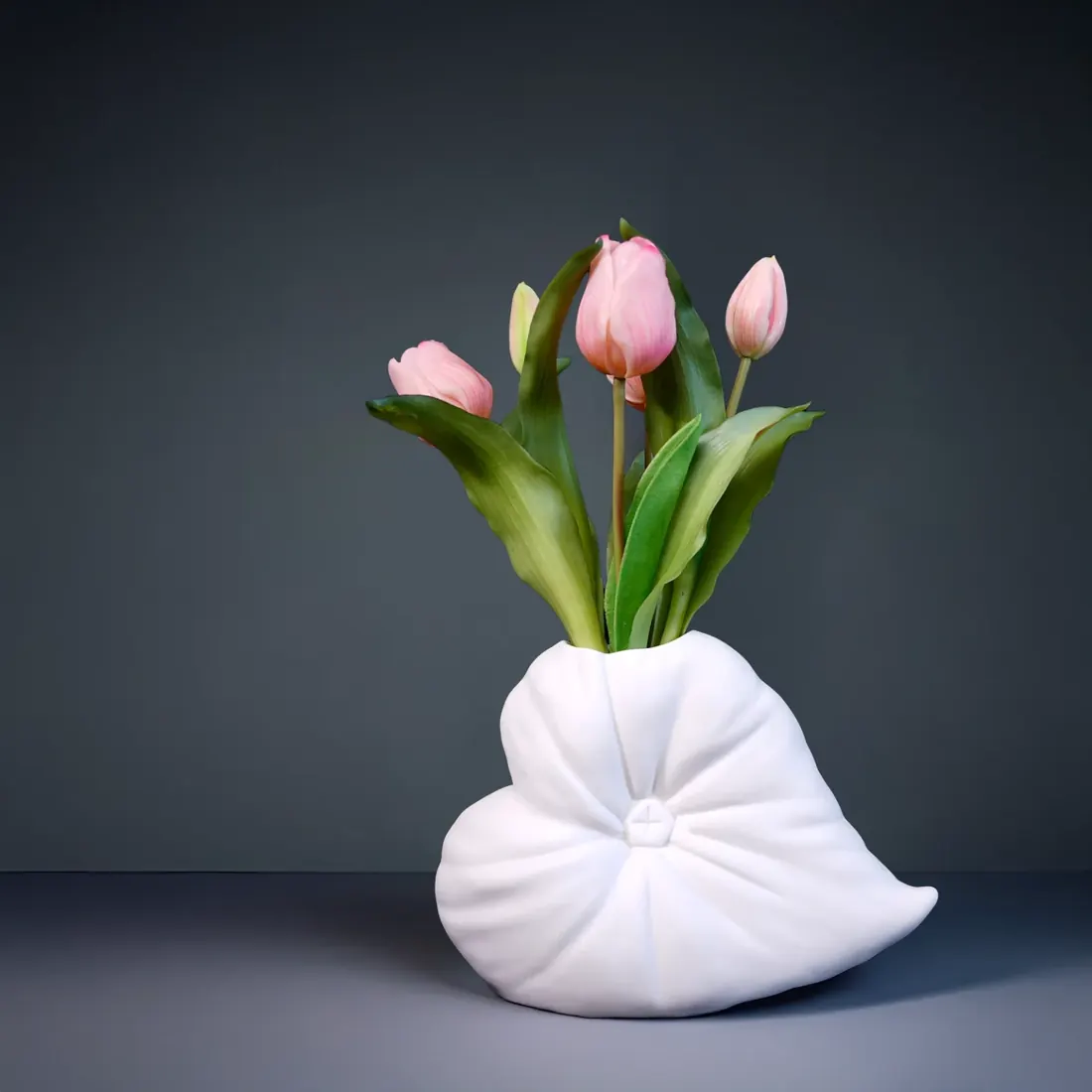
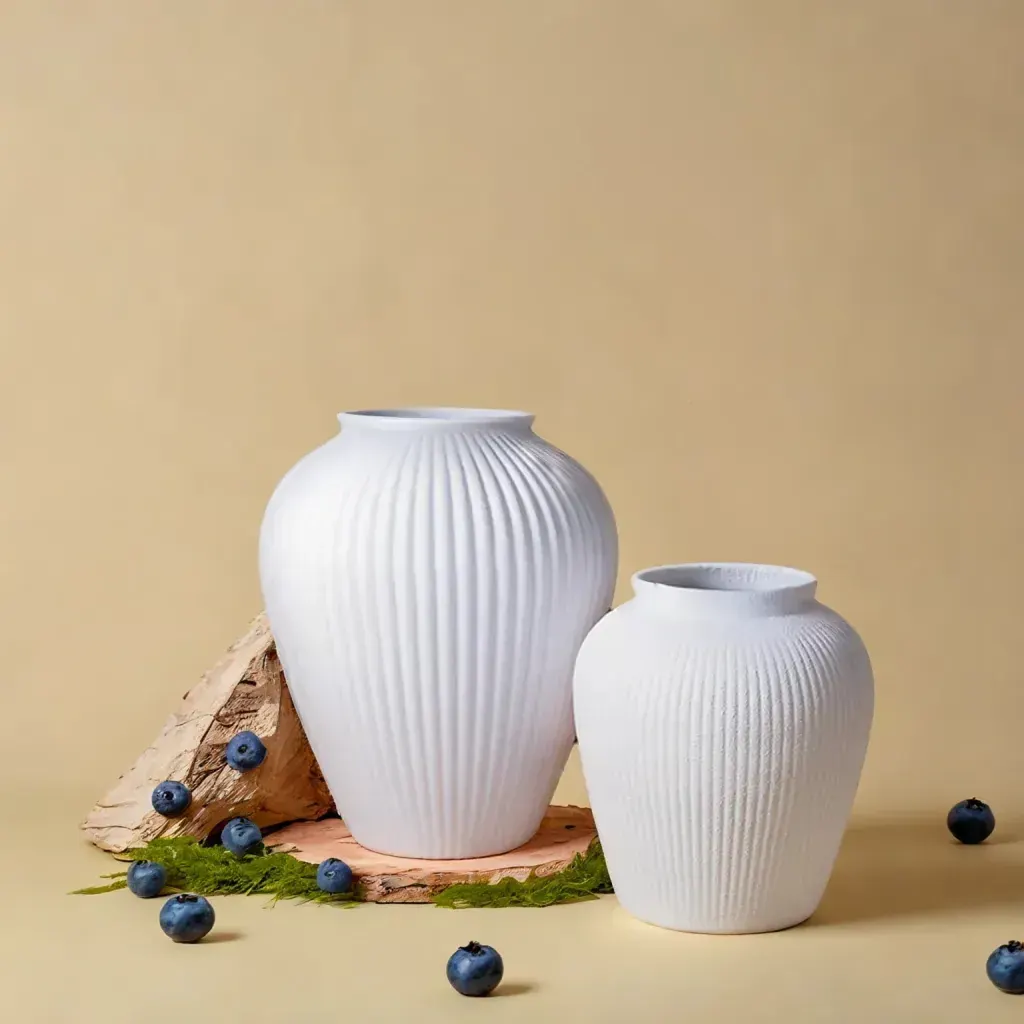
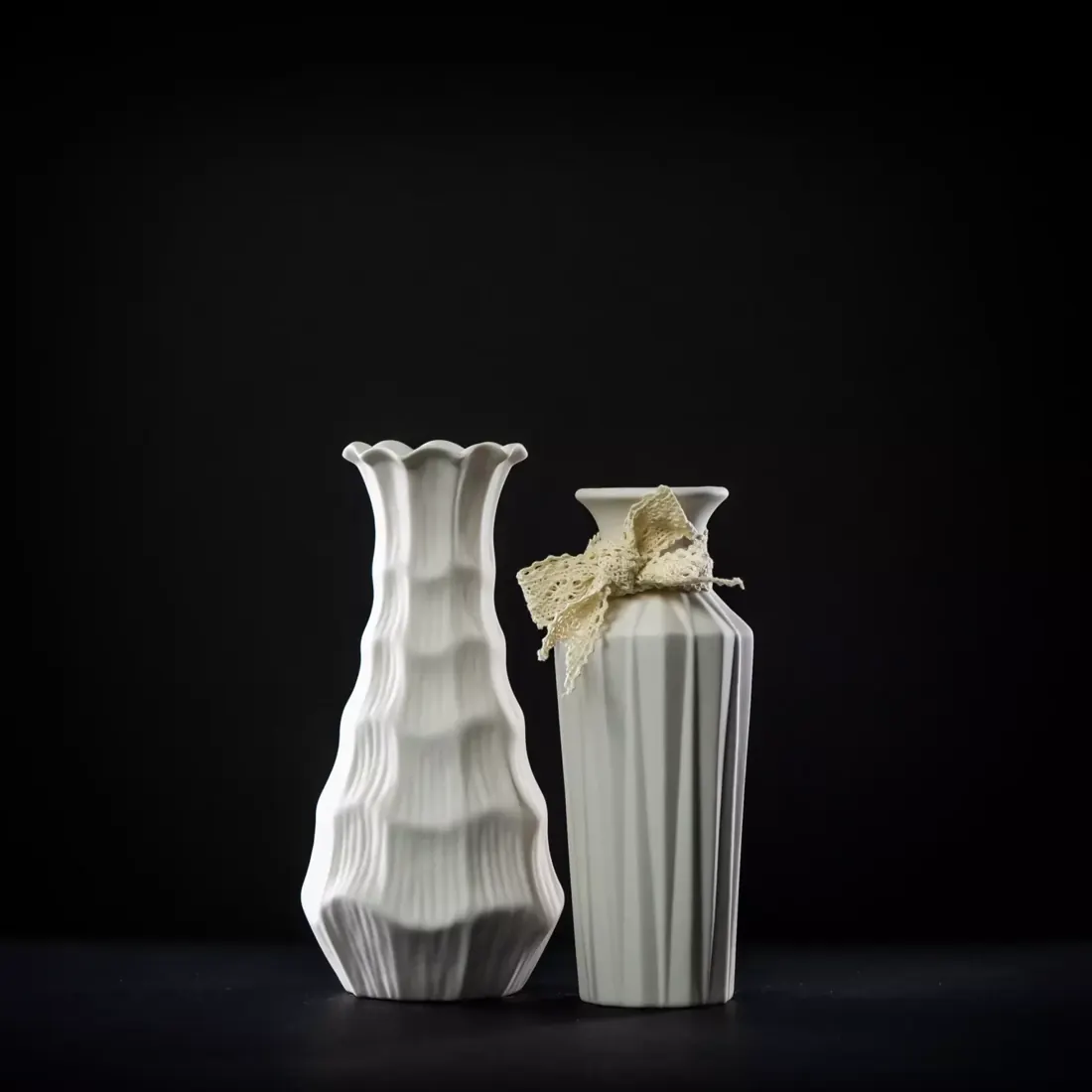
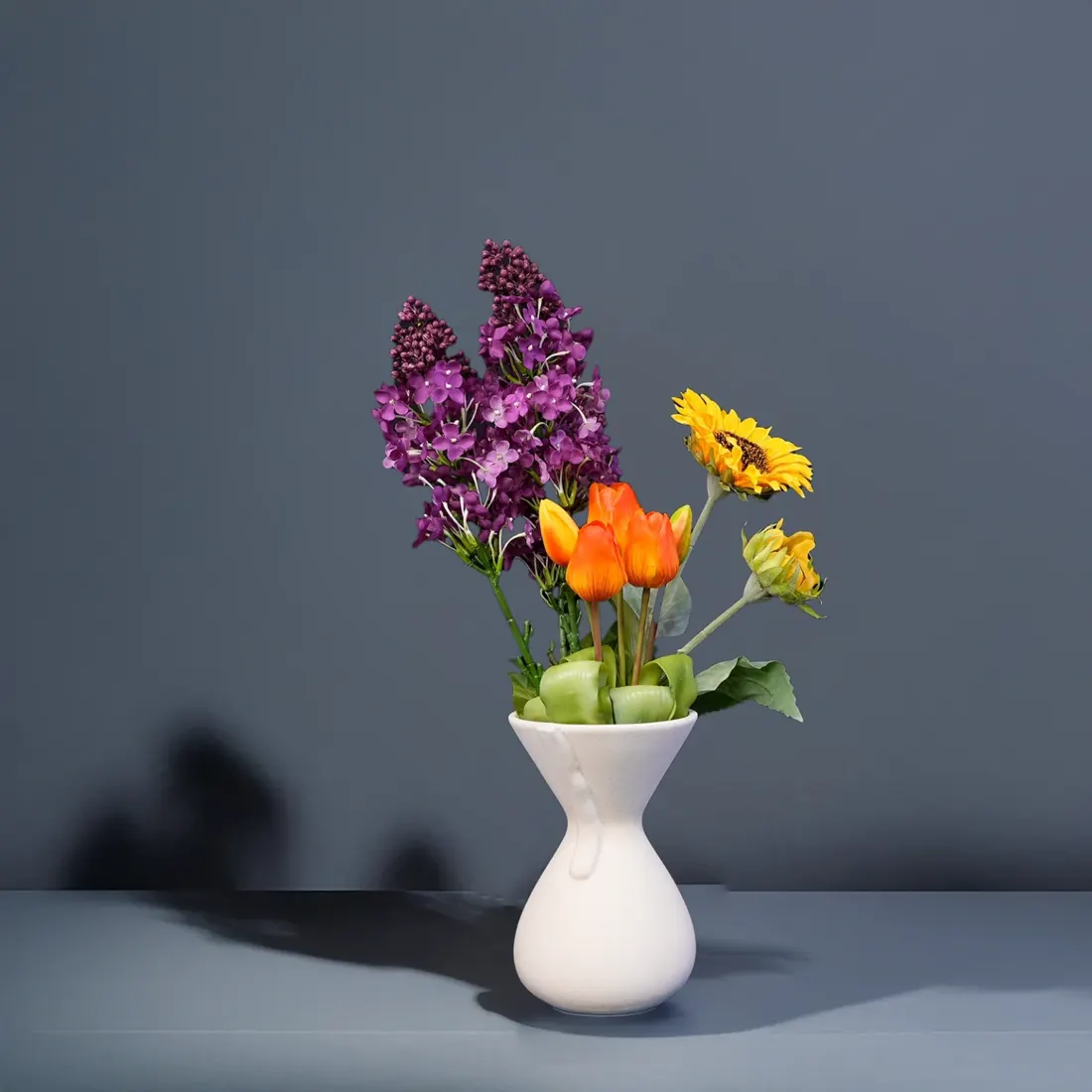
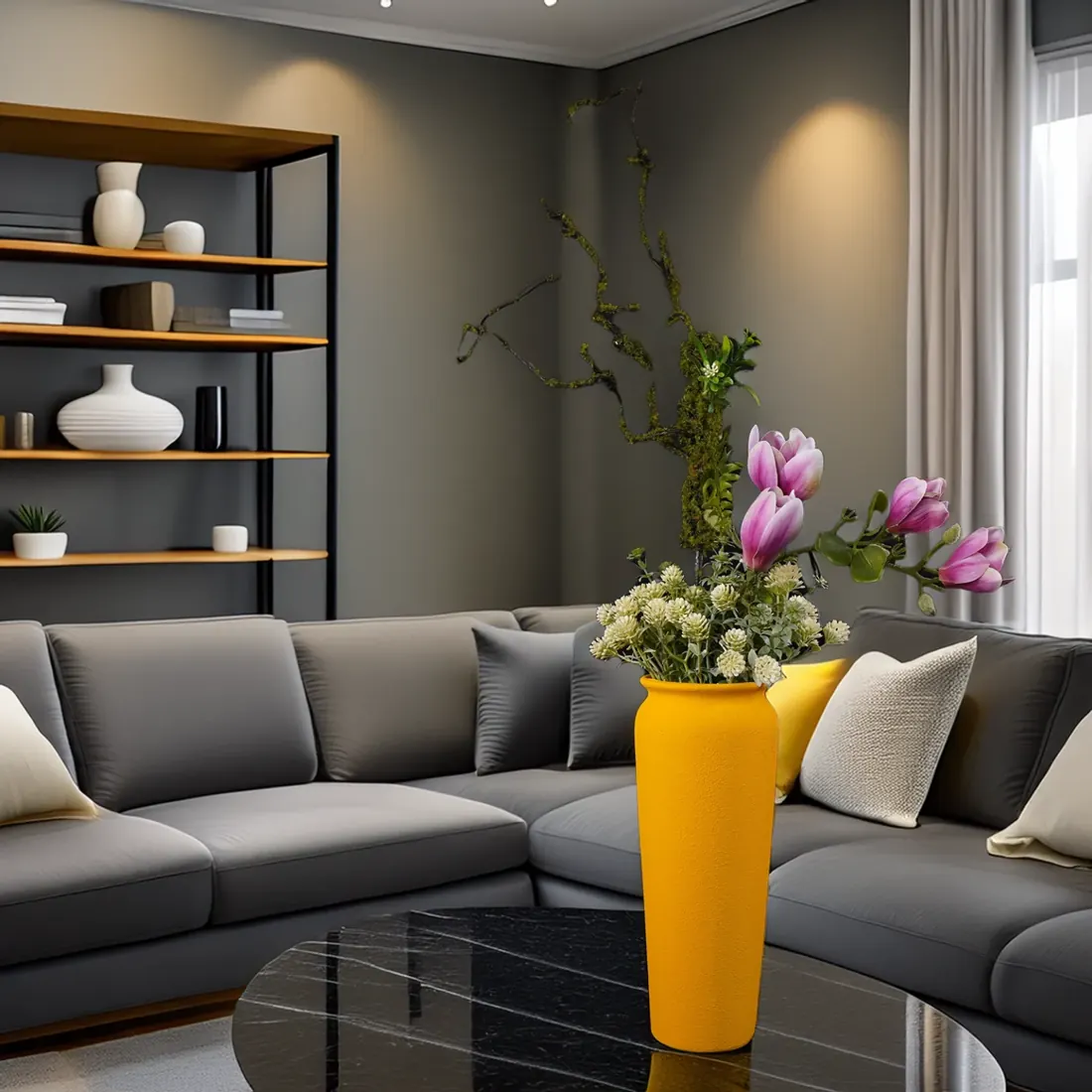
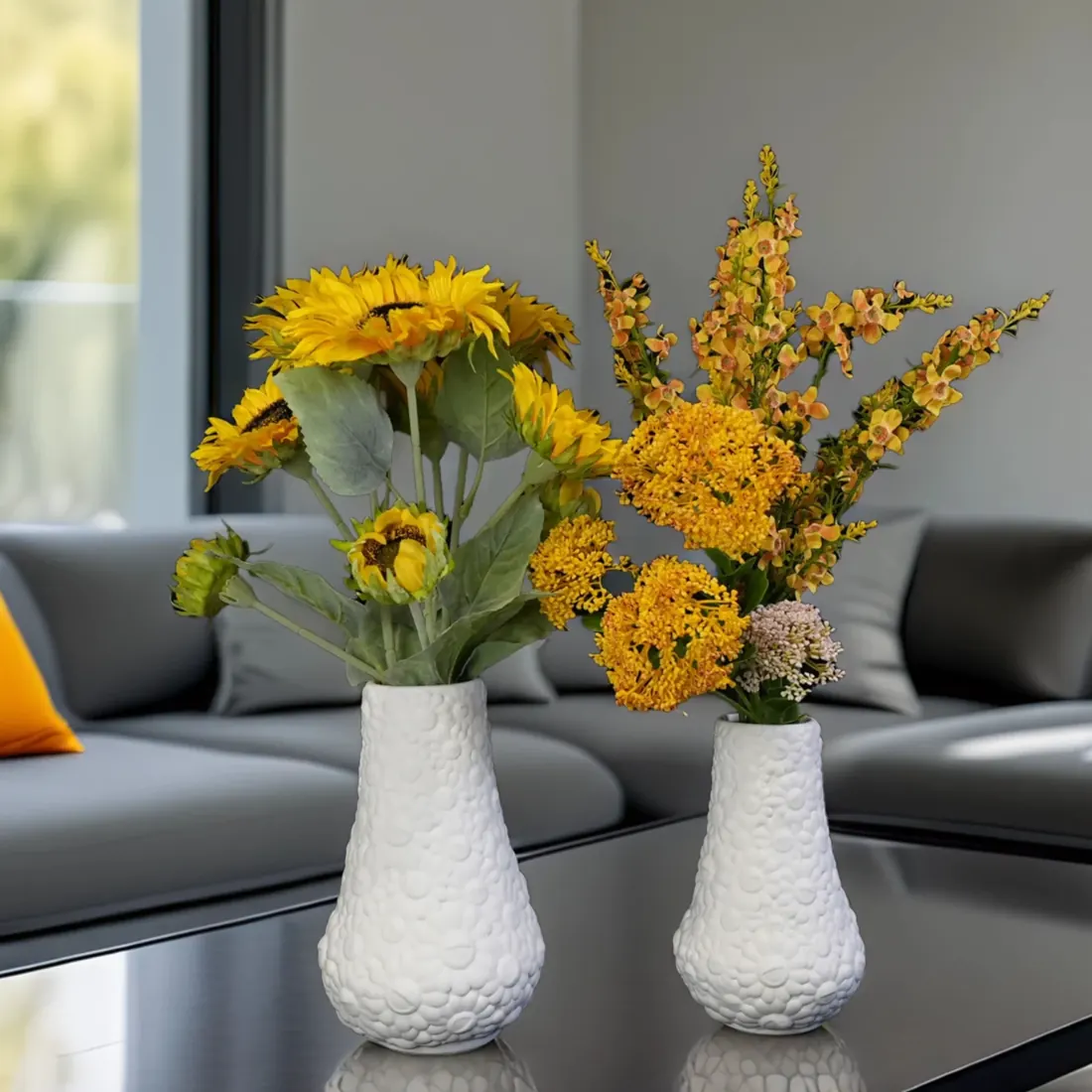
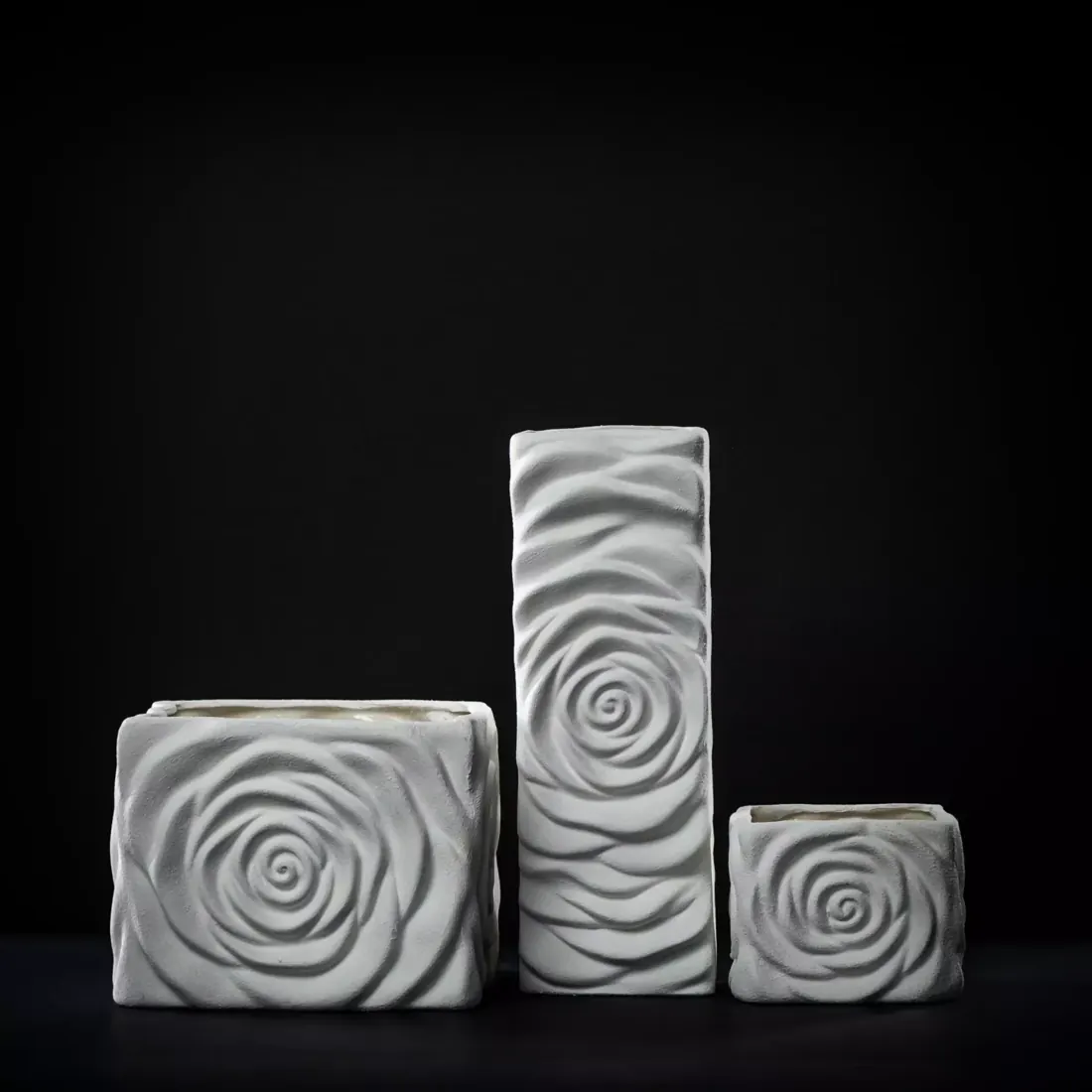
Small succulents have a charm of their own. You can group them on a tray, a shelf or your desk, in pots of different heights. The contrast between fleshy leaves and a smooth, white porcelain surface is always beautiful. Next to them, a small vase like Selene, white, 15 centimetres tall, with a single flower or a sprig, completes the composition.
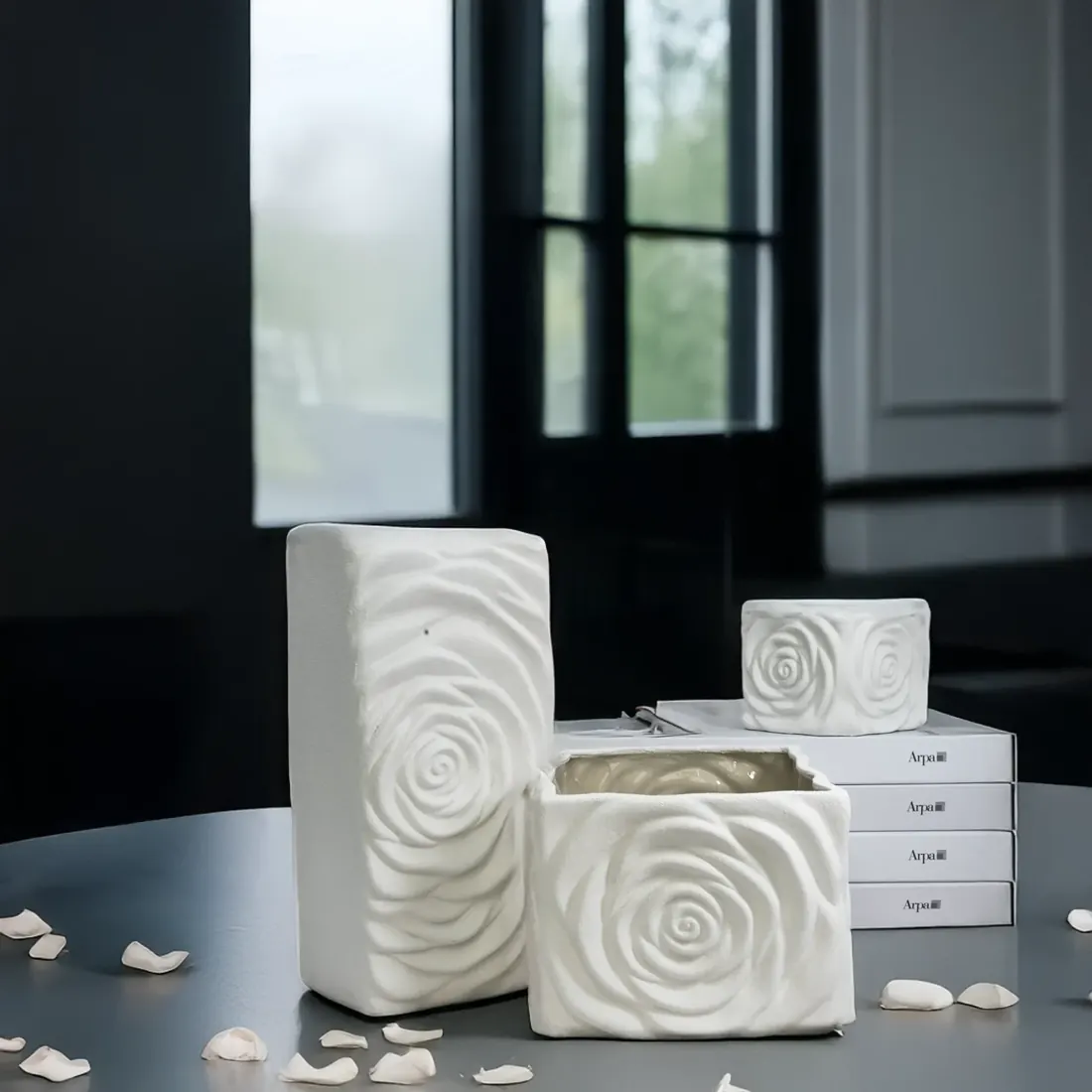
Our La vie en rose set suits a corner like this beautifully. It has a 27-centimetre tall vase and two porcelain planters, in white, white and gold, black or black and gold. The small planter has a 10-centimetre opening and is 8 centimetres tall, just right for a small succulent. The vase in the set can hold a branch or a few flowers, so all three tell the same story.
A succulent in a beautiful pot is also a gift that lasts. If you're thinking of a present for someone who has just moved, you'll find more ideas in our guide to housewarming gifts.
Succulents as wedding favours
Small succulents have become much-loved wedding favours. They're alive, they last a long time and guests take them home as a memory that grows.
A few tips if you're thinking about them:
- Order early, but bring them close to the wedding. Plants do better in a bright spot than in boxes in storage.
- Choose hardy, compact species, like echeveria, haworthia or small sedum.
- Don't water them the day before. A wet pot can tip over and stain the tablecloths. Succulents easily survive a few days without water.
- Add a small label with the plant's name and two lines of care: “Lots of light. Water rarely.”
- Tie them in with the table decor. The colour of the pots can follow the palette of the flowers and vases on the tables.
If you want the favours to match everything on the table, there's a whole guide to wedding table decor. And for the centre of the table, a set like Summer Wedding, with two porcelain vases of different heights, adds a touch of fresh flowers next to the succulents.
Frequently asked questions
How often should you water succulents in a flat?
There's no fixed day. Water only when the soil is completely dry, checking with your finger. In spring and summer that might mean once every one or two weeks, and in winter once every three or four weeks or less.
Which indoor succulents cope with less light?
Haworthia and sansevieria tolerate low light better than other succulents. Still, none of them loves the dark. Even they grow better near a window.
How do you look after succulents in winter?
Water them much less often, keep them in the light and away from radiators. Don't feed them until spring. A bright, cooler spot helps them rest.
What pot is good for succulents?
One with a drainage hole, slightly bigger than the roots, filled with cactus and succulent compost. If you like a decorative pot without holes, use it as a cover for a simple plastic pot.
Why are my succulent's leaves going soft?
Most often, from too much water. Stop watering and let the soil dry out. If the stem is soft at the base, save a healthy part and replant it in dry soil.
Are succulents a good idea for wedding favours?
Yes, especially small, compact ones. They're hardy, stay beautiful for months if they get light and remind your guests of your day. Add a label with two lines of care.
If you'd like a new corner for your succulents, or a vase to keep them company, take a look at our porcelain vases and vase sets. Delivery in Romania is free on orders over 500 RON, and our showroom at Str. Johannes Kepler 69, Sector 2, Bucharest, is waiting for you to see them up close.