Guide · 8 minute read
Artificial flowers in a vase: how to choose, arrange and keep them looking good
How to choose the vase, how to arrange artificial and dried flowers so they look alive, and how to keep them clean.
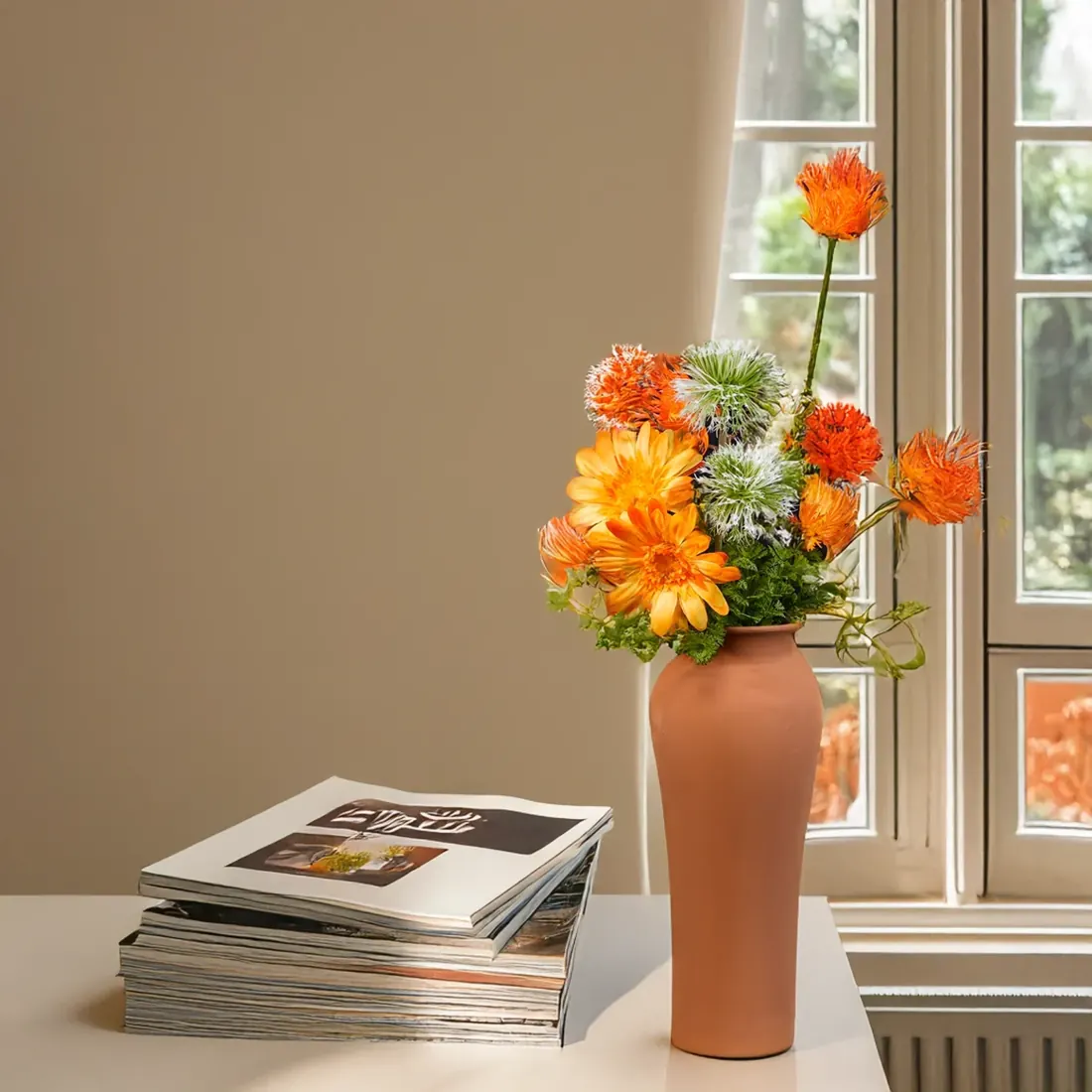
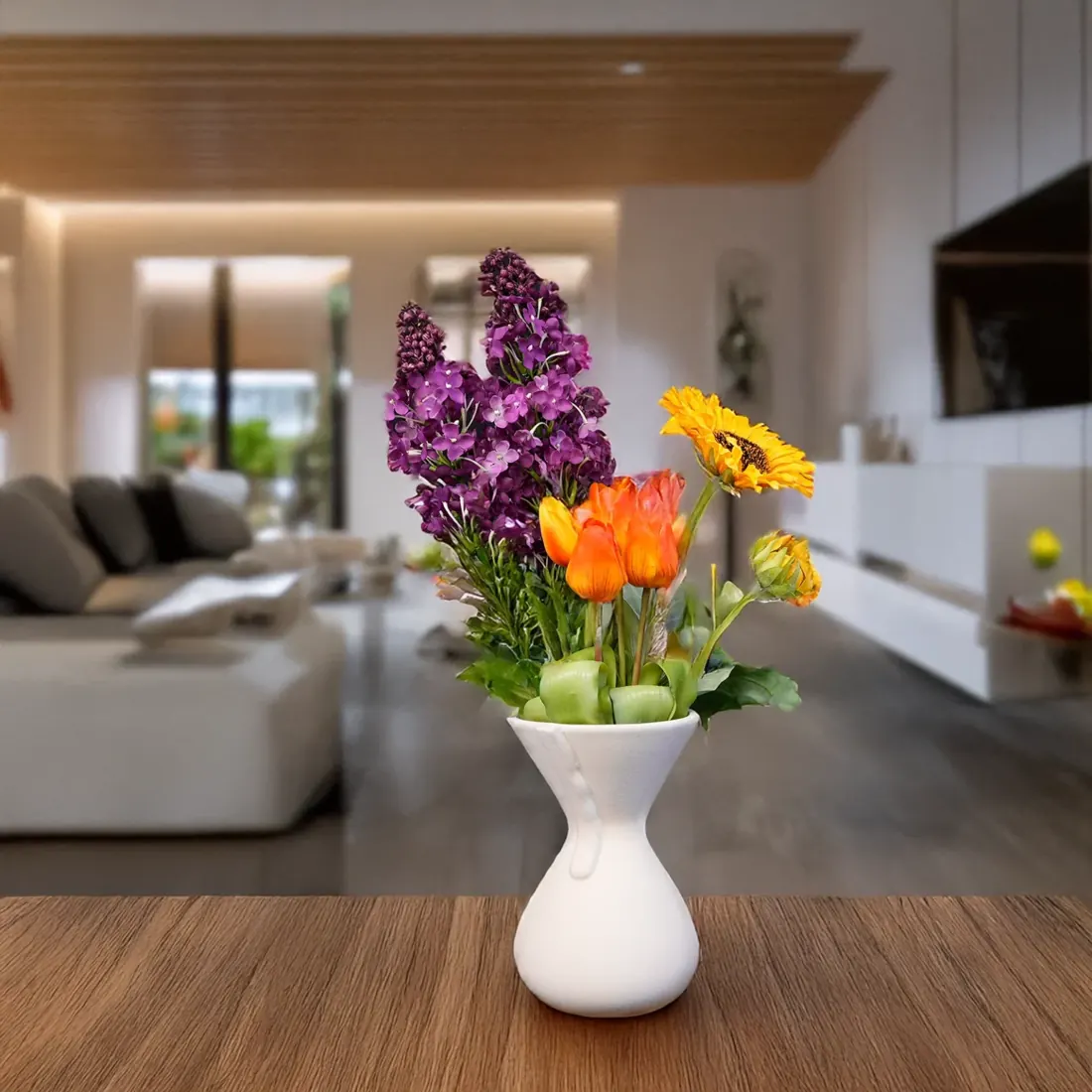
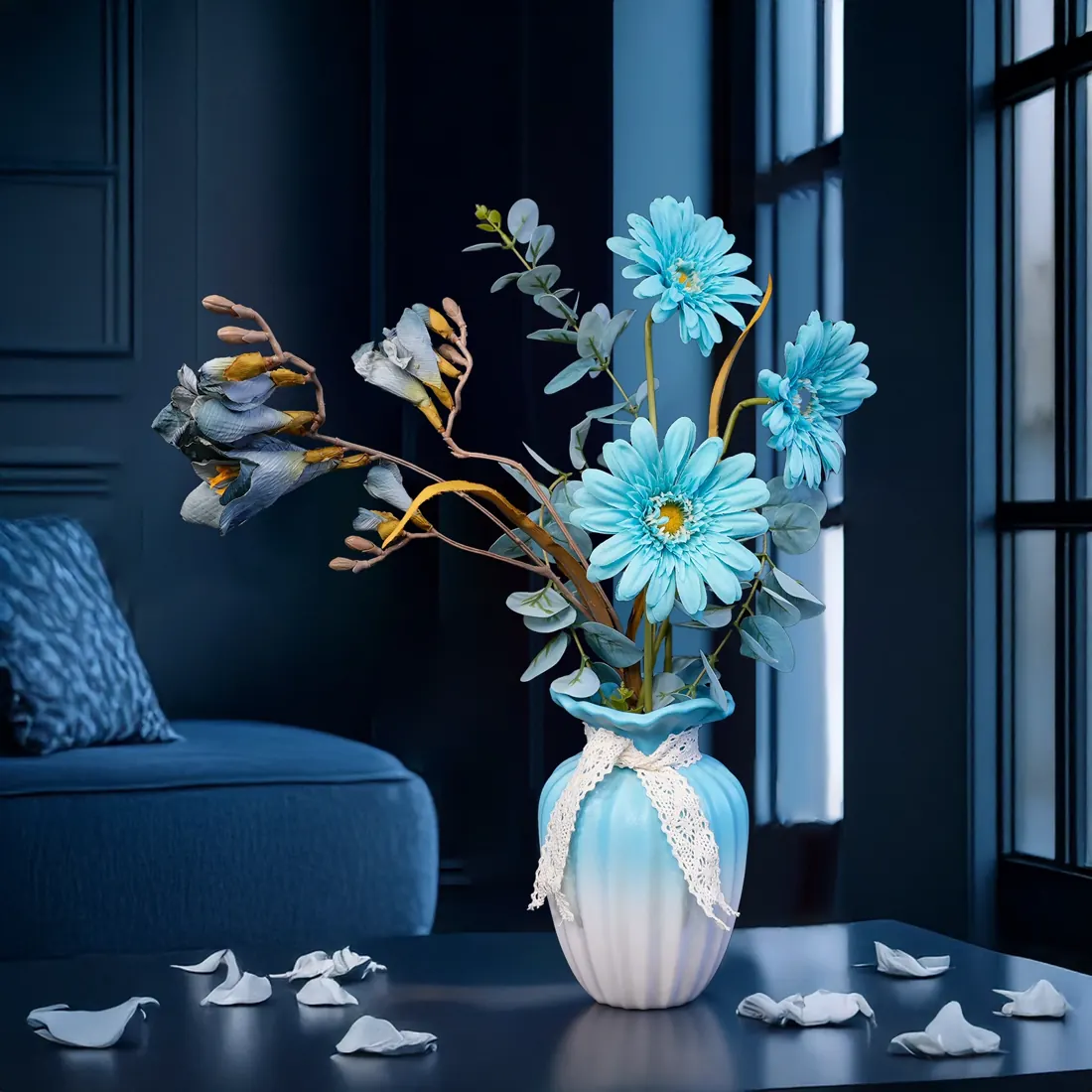
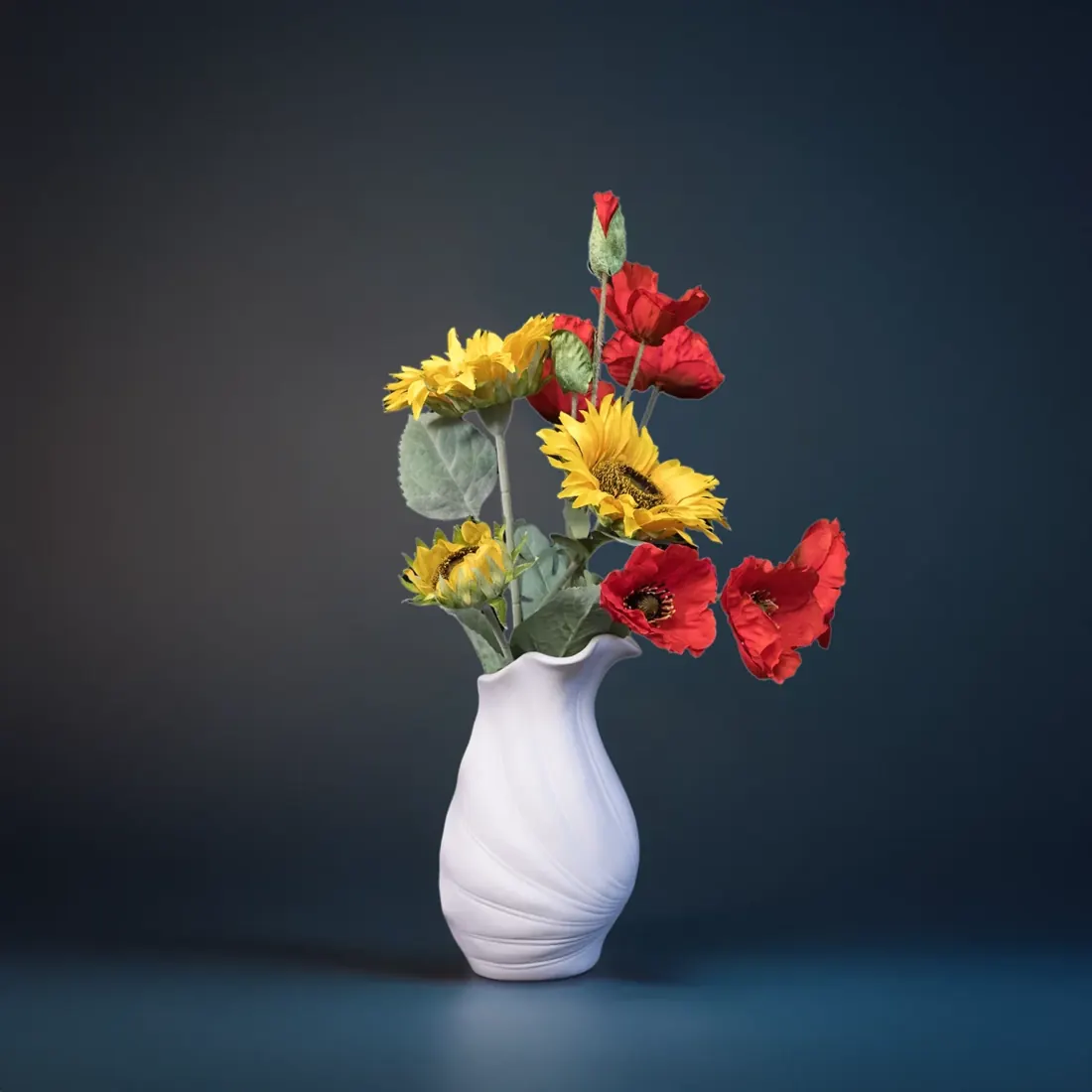
Artificial flowers in a vase are the answer for corners of the home that deserve colour all year round, even where a fresh bouquet wouldn't survive. They don't need water, they don't wilt and they don't ask whether you were home at the weekend. The secret is to stop them looking “plastic”. And that depends less on the flowers and more on the vase you put them in and the way you arrange them.
Below you'll find everything you need: how to choose the vase, how to make an arrangement that looks freshly picked from the garden, what to do with dried flowers and how to keep them clean for months.
Why put artificial flowers in a vase
There are a few situations where artificial flowers are, honestly, the best choice:
- Rooms with little light, where real flowers fade quickly.
- Hard-to-reach spots, such as a high shelf or a console table in the hallway.
- Homes you're often away from, where nobody changes the water.
- The kitchen and bathroom, where heat and steam are unforgiving to a fresh bouquet.
- Homes with curious cats, where you want to avoid plants they might nibble.
And there's another reason, perhaps the loveliest: a well-made artificial arrangement becomes part of the decor. You choose it once, with care, and enjoy it every morning.
How to choose a vase for artificial flowers
The vase makes half the impression. A beautiful porcelain vase with a fine texture and a warm colour instantly lifts any arrangement. One that is too small or too narrow makes it look improvised.
Artificial flowers in a large vase
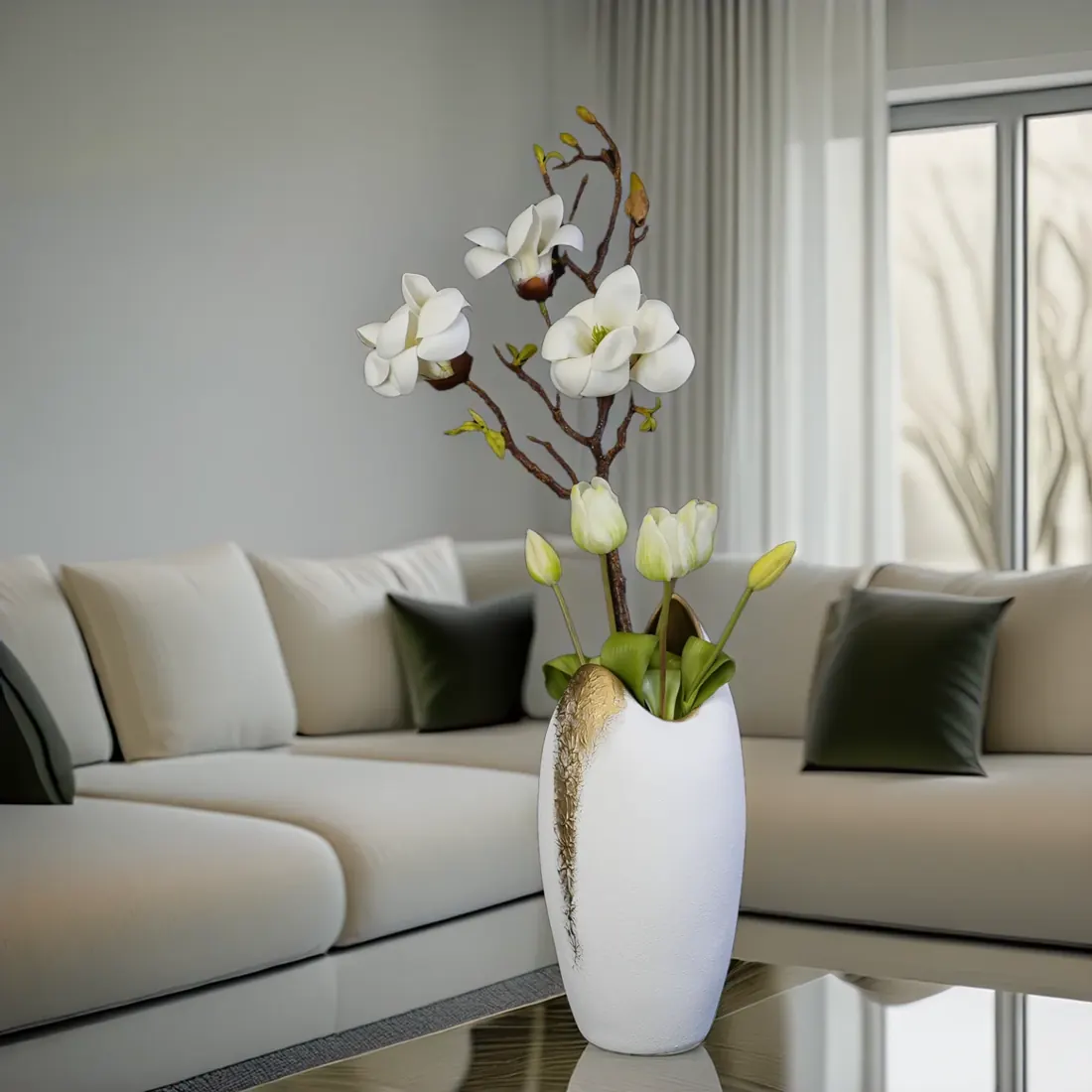
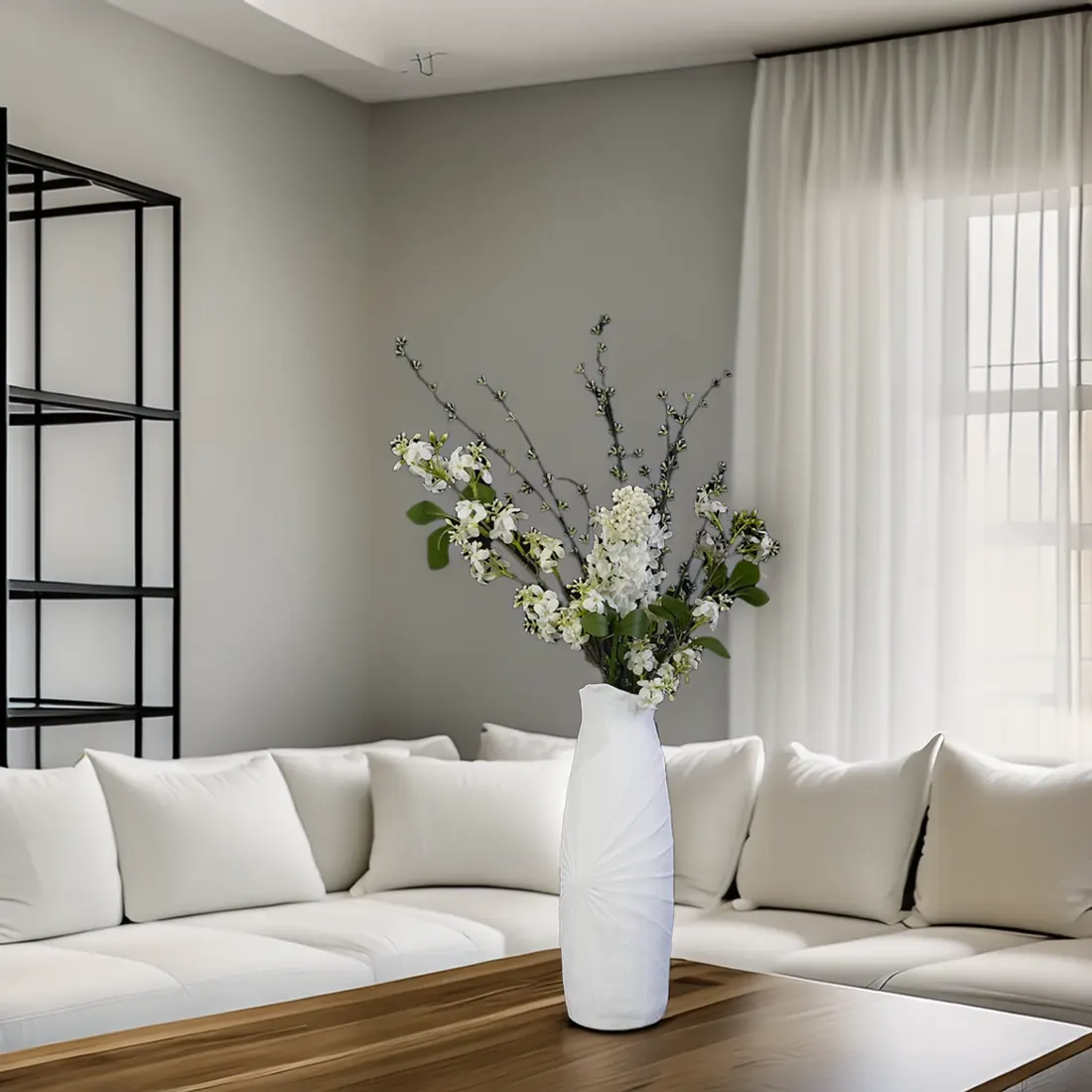
“Artificial flowers in a large vase” is one of the most common searches, and rightly so. A tall vase on the floor next to the sofa or on a chest of drawers changes the whole room. For that you need a vase that stands steadily and has an opening wide enough for several stems.
A few of our vases that work well here:
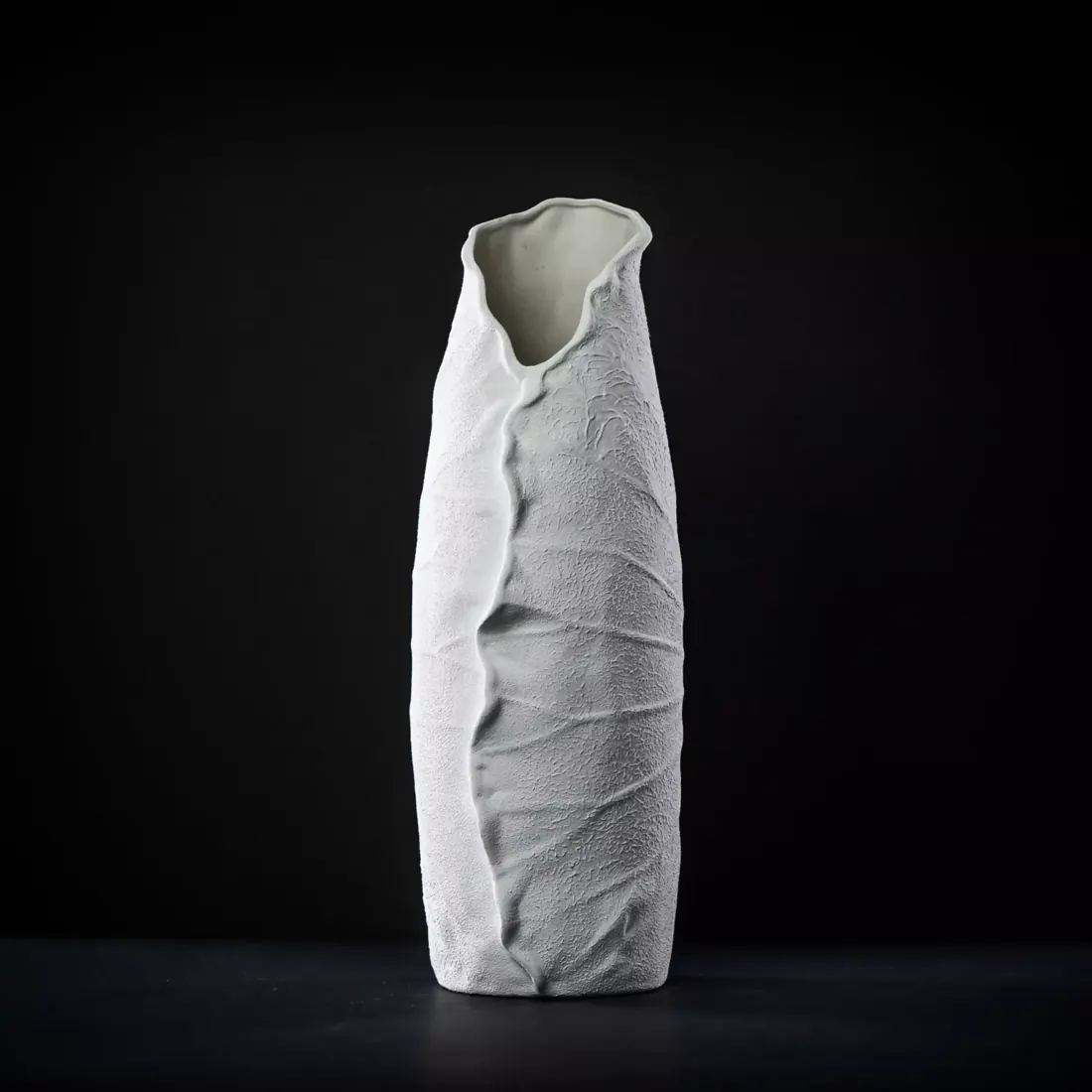
- The Nyx XL vase, white, 37 cm tall, with an 11 cm opening. It holds a generous bunch of flowering branches.
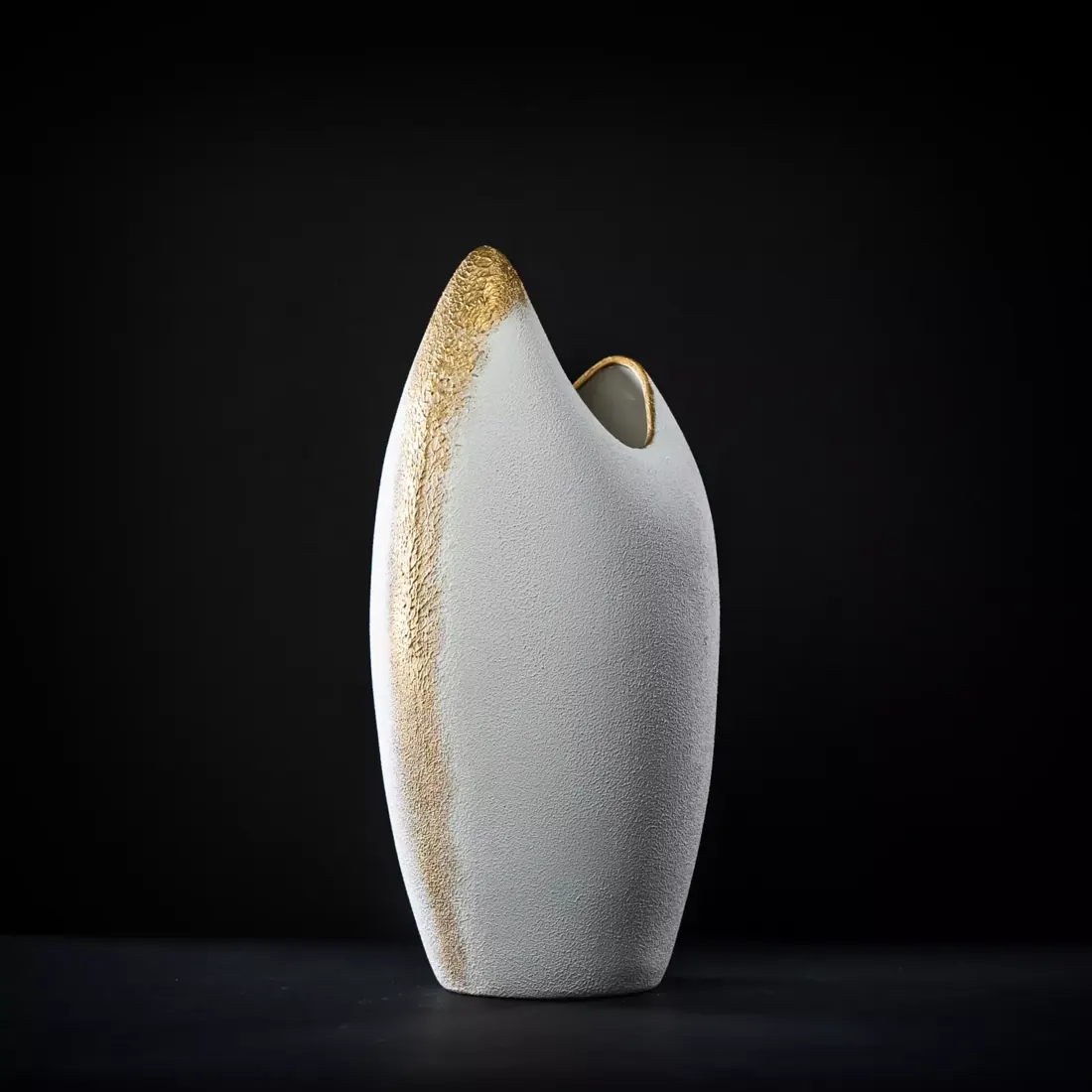
- The Nyx L vase, 35 cm, white with gold leaf, for a more festive corner.
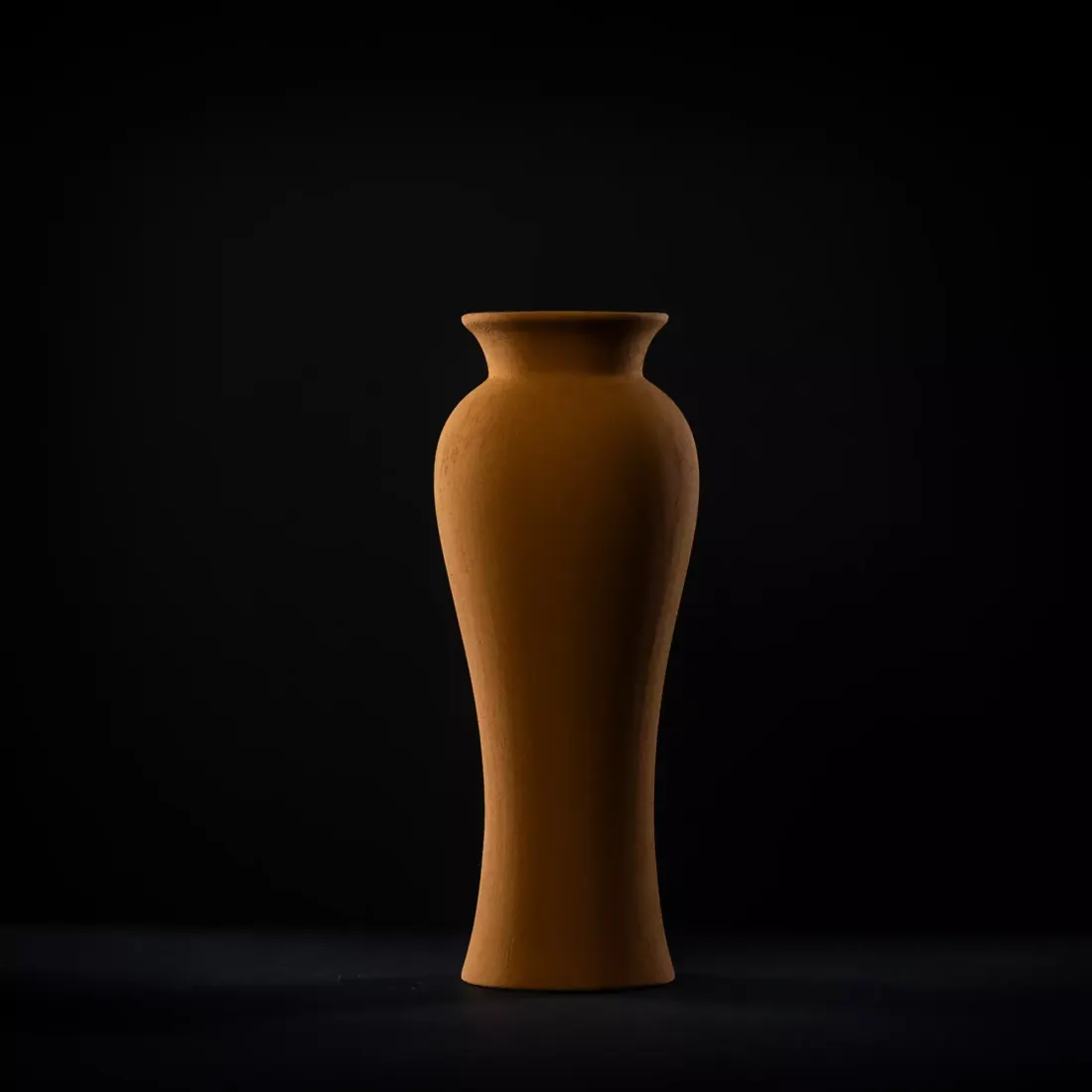
- The Athena vase, 30.5 cm, matt light brown, lovely next to dried flowers in beige and cream tones.
Narrow-necked vases for a single stem
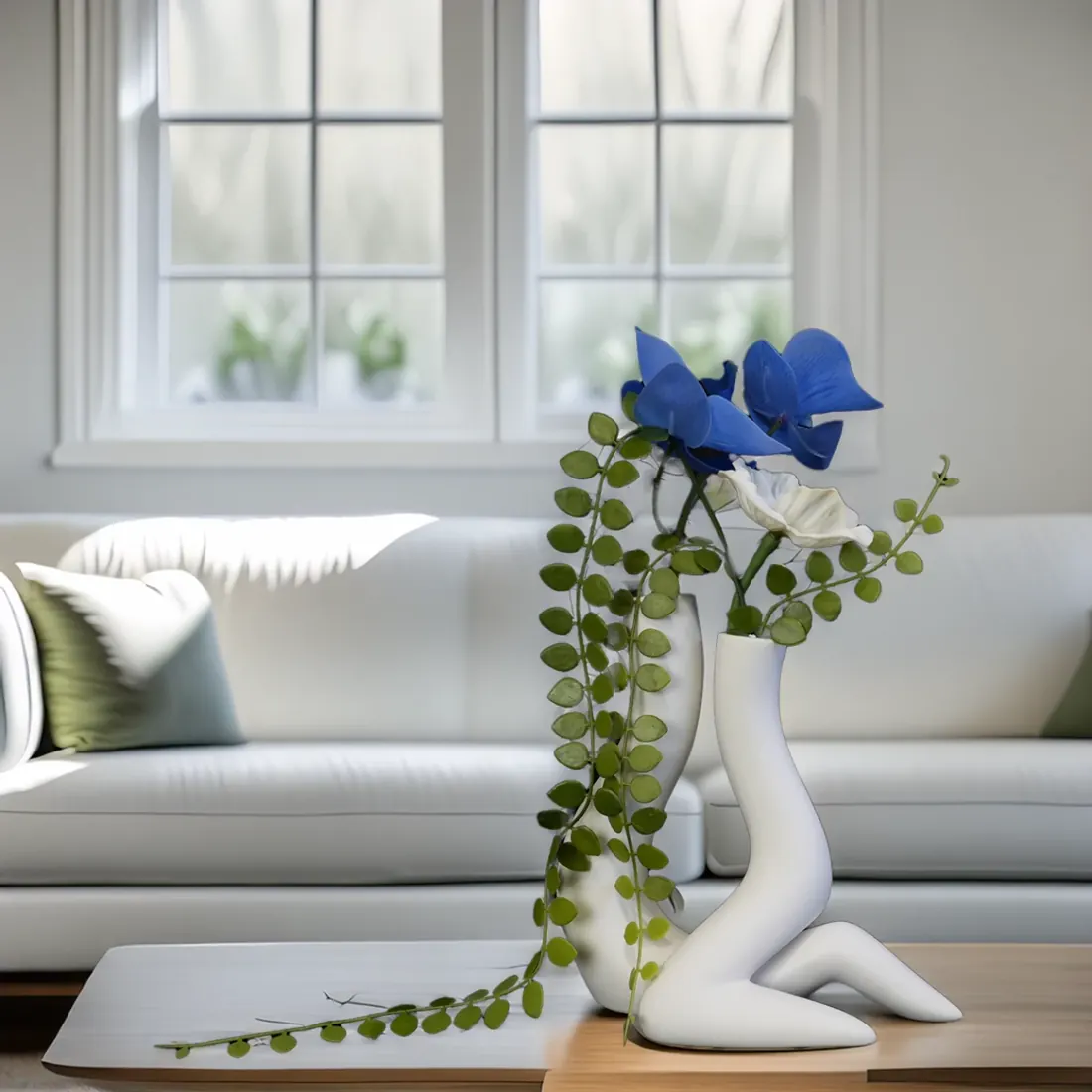
Not every arrangement has to be lavish. A single artificial flower, a sprig or a stem of dried lavender in a narrow-necked vase has a calm, almost Japanese feel. This is where vases with an opening of a few centimetres work, placed in twos or threes at different heights.
Wide-mouthed vases for round bouquets
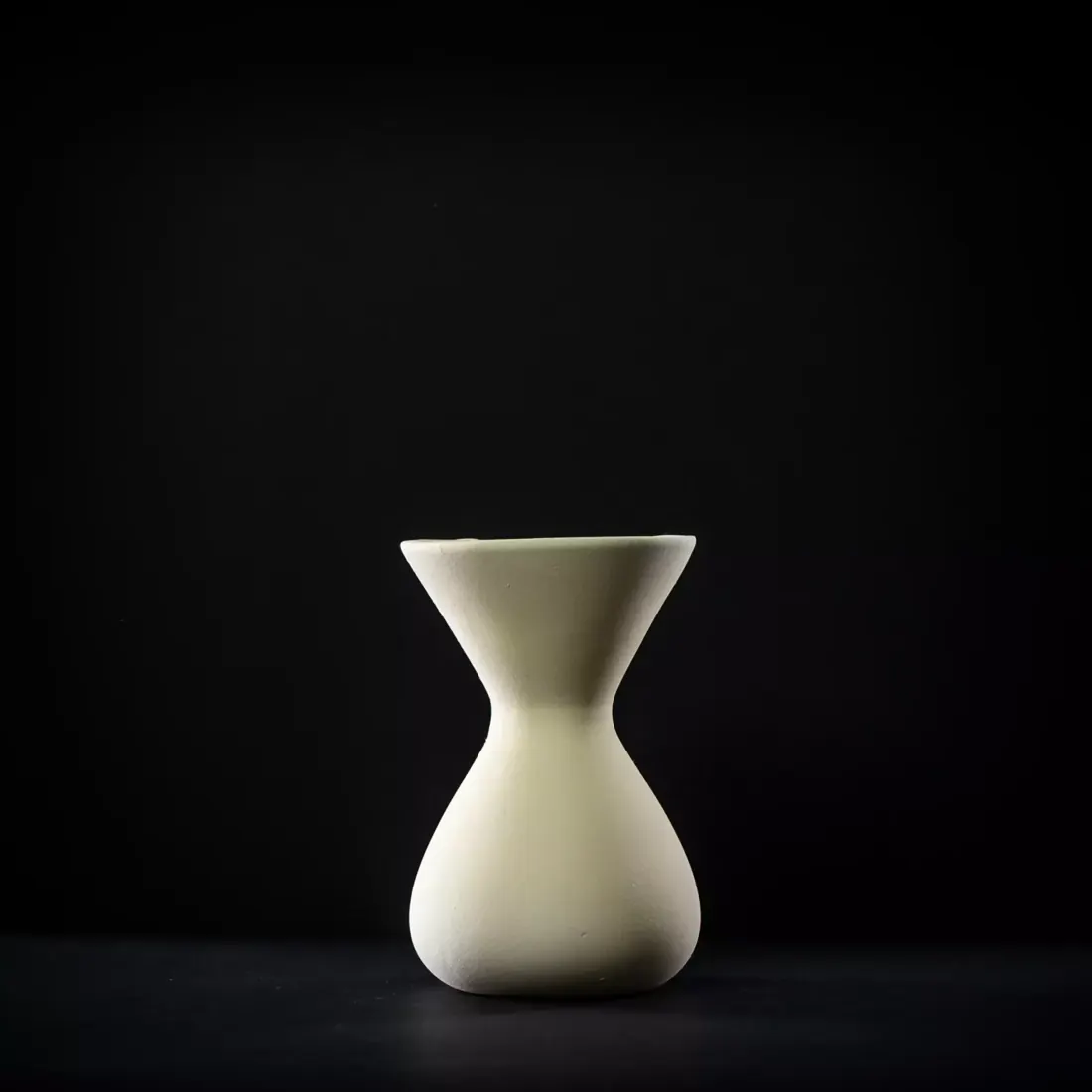
For a short, full bouquet, like the ones on a dining table, choose a lower vase with a wide mouth. The Hecate vase, in matt cream, is 21 cm tall with a 13.5 cm opening. It holds a round bouquet of dried flowers or artificial peonies beautifully.
The proportion rule
A rule florists often use: an arrangement looks balanced when it is roughly one and a half to two times taller than the vase. It isn't a law. It's a starting point you play with until you like what you see.
How to arrange artificial flowers in a vase so they look natural
This is where all the magic happens. Good-quality artificial flowers can look convincing, but only if you give them a little life.
1. Open up and shape each stem
Flowers usually arrive bunched together, with the leaves pressed against the stem. Take them one by one. Open the petals with your fingers, spread the leaves, gently bend the wired stems. In nature, no flower stands perfectly straight.
2. Work with different heights
Cut or bend the stems so the flowers don't all sit at the same level. A few up high, a few in the middle, a few resting on the rim of the vase. That's how depth appears.
3. Choose odd numbers and few varieties
Three, five or seven main flowers usually look more natural than an even number. And it's nicer to combine two or three varieties than ten. Add greenery: eucalyptus leaves, fern, small twigs. Greenery links the flowers and gives them air.
4. Secure the stems in the vase
In a large vase, the stems slide and the bouquet leans to one side. A few simple fixes:
- a piece of dry floral foam cut to the shape of the vase;
- pebbles, sand or rice at the bottom, which hold the stems in place and make the vase more stable;
- crumpled paper, if the vase isn't transparent.
5. No water, especially for wired stems
Artificial flowers don't need water. In fact, the wire inside the stems can rust and stain both the flower and the vase. Keep the vase dry.
6. Put them where real flowers would be
A bunch of artificial tulips looks natural in spring on the kitchen table. The same bunch on the windowsill in December gives itself away. Change them with the seasons: wildflowers in summer, russet leaves and berry twigs in autumn, white branches in winter.
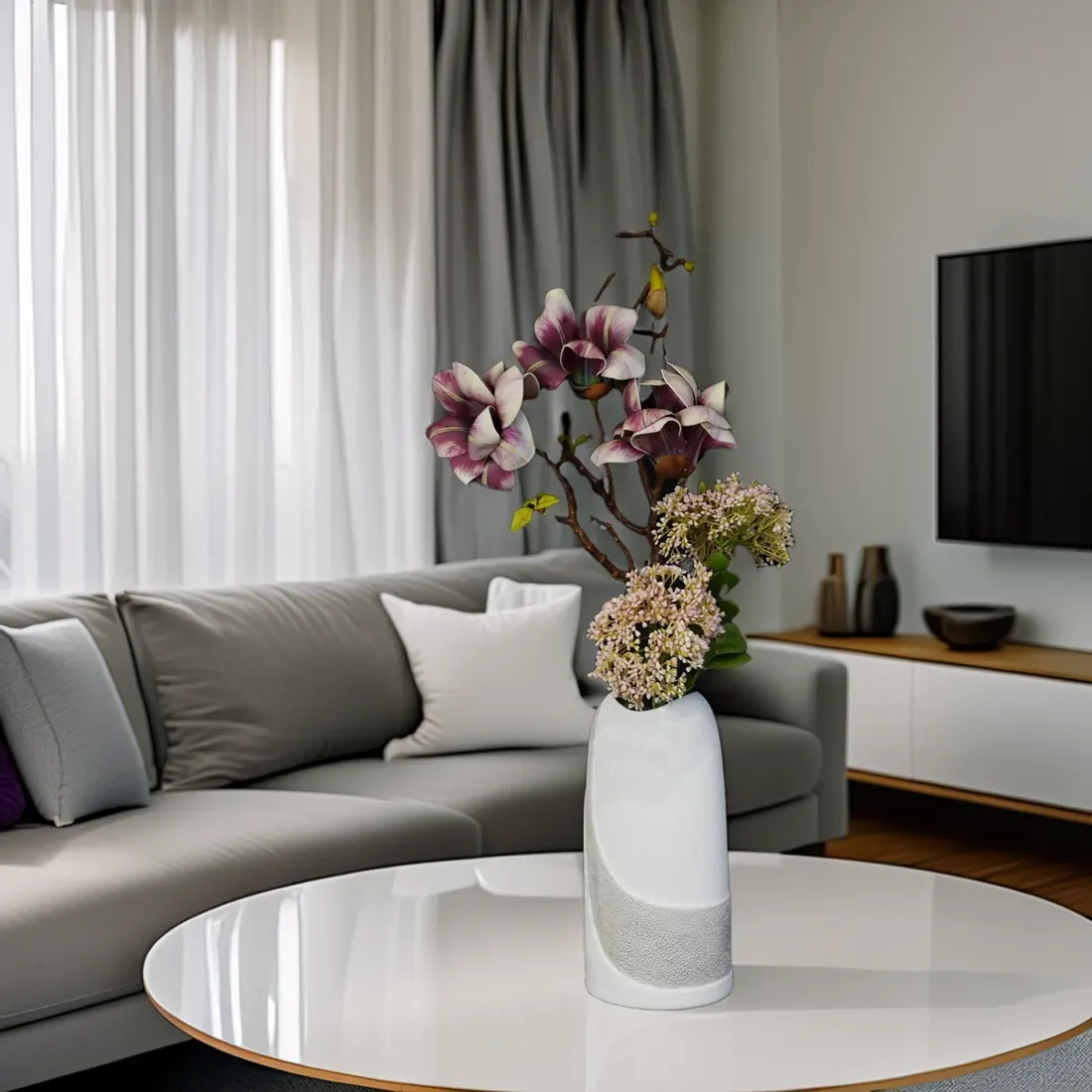
Vases with ready-made artificial arrangements
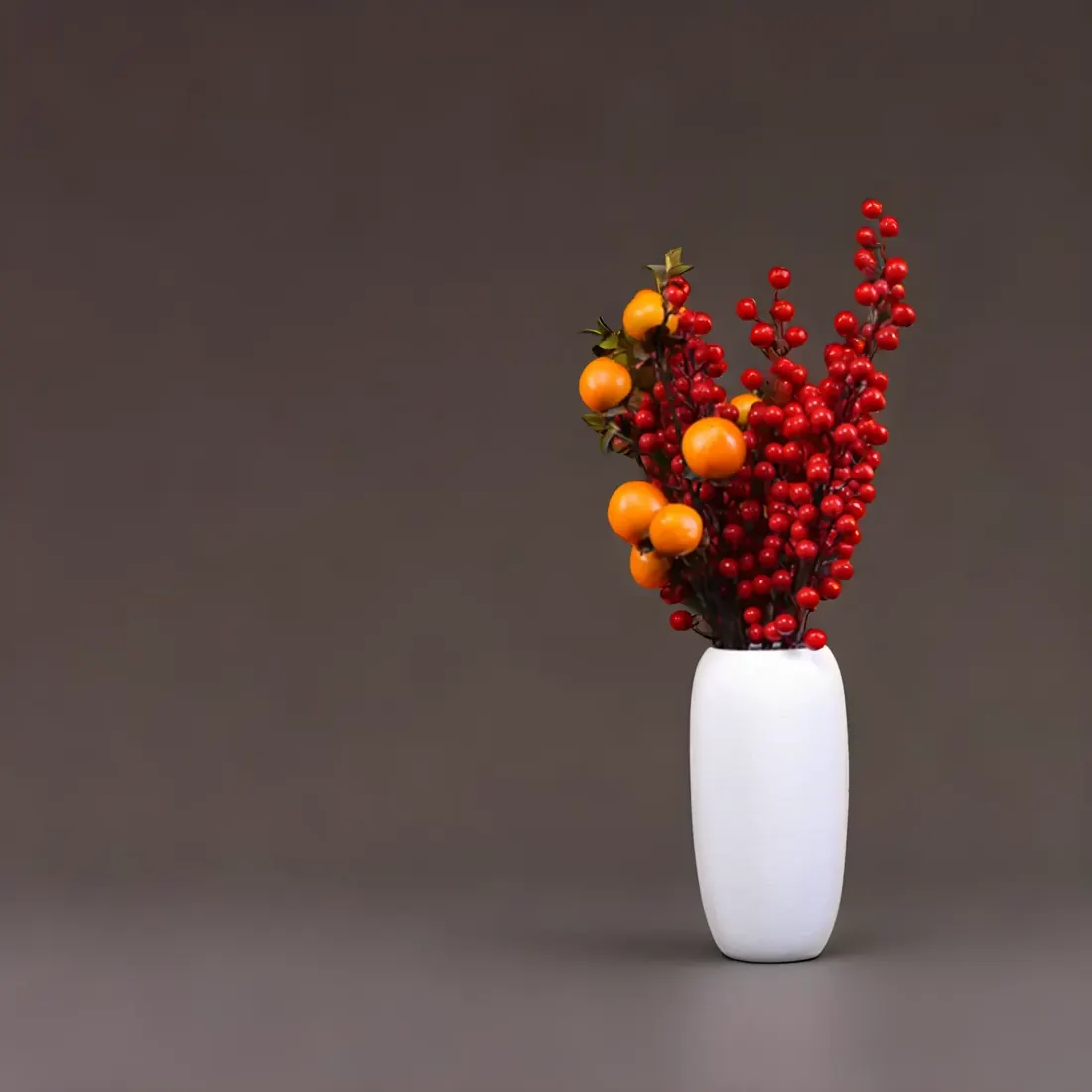
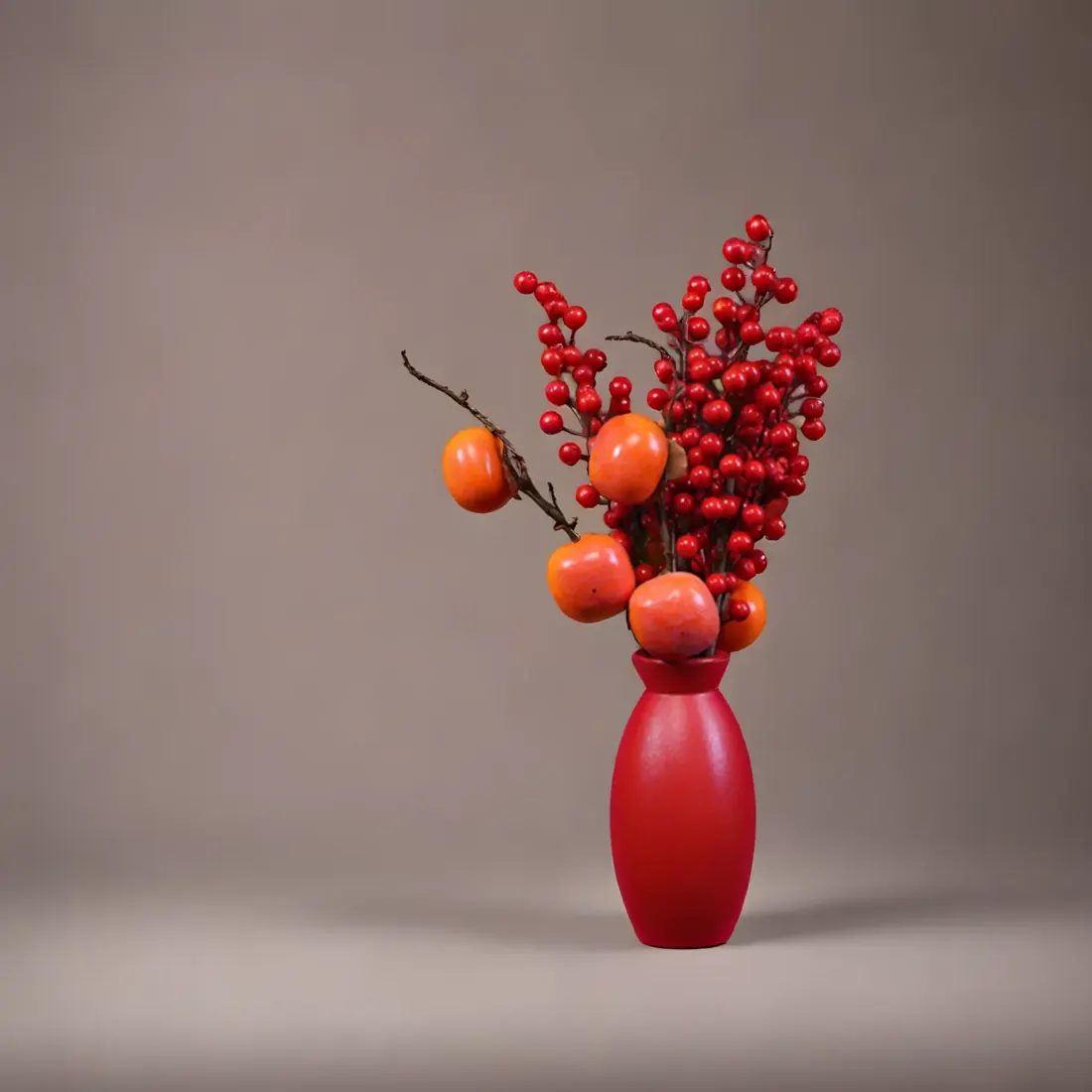
If you'd rather skip the arranging, a vase that comes with the arrangement already done is the simplest way. We have two, designed as an autumn pair:
- Persefona, a porcelain vase with an artificial fruit arrangement, 309 RON. The vase is 21 cm tall, and 52 cm with the fruit.
- Demetra, a porcelain vase with an artificial fruit arrangement, 309 RON. The vase is 18 cm tall, and 43 cm with the fruit.
Side by side, on a console table or the dining table, they bring that warm harvest feeling, with red berries and round orange fruit.
Dried flowers for a vase
Dried flowers are the natural cousins of artificial ones. They have real texture and muted colours: beige, cream, rust, dusty pink. And they have a discreet scent, like a field in late summer.
Which dried flowers work in a vase
A few of the most popular: lavender, pampas grass, wheat ears, gypsophila, limonium, dried eucalyptus, thistles, cotton. You can combine them with each other or with a few artificial stems for colour.
How to arrange them
Dried flowers are fragile. Work slowly and hold the stems from the bottom, not by the flowers. They look wonderful in matt vases in warm tones, where the texture of the flower meets the texture of the porcelain. And because they're light, they work very well in narrow-necked vases, one or two stems at a time.
What to avoid
- Water. Dried flowers don't go in water. They go soft and mouldy.
- Direct sunlight. It fades them within a few weeks.
- Damp. The bathroom isn't a good place for them.
How to clean artificial flowers
Dust is the only real enemy of artificial flowers. A dusty bouquet instantly loses its lively look. The good news: they're easy to clean if you do it often.
- Everyday dust: a soft brush or a feather duster over the petals once a week.
- A hairdryer on cold: hold it at a distance and blow gently over the bouquet. It also works well for dried flowers, on the lowest setting.
- For fabric flowers: put the flowers in a large bag with a handful of coarse salt, close the bag and shake it gently. The salt picks up the dust. Then take the flowers out and shake them well.
- For plastic or silicone flowers: you can rinse them under a stream of lukewarm water with a little mild soap, then leave them to dry completely on a towel. Only do this if the flowers have no glued or fabric parts.
The vase deserves the same care. Wipe porcelain with a soft, damp cloth. No abrasive sponges, so it keeps its shine or its matt finish.
Frequently asked questions
Can I put water in a vase with artificial flowers?
There's no need, and most of the time it isn't a good idea. Many artificial flowers have wire in their stems, which rusts in water. If you like the look of water in a clear vase, there are special resin products that imitate it.
Which artificial flowers look the most natural in a vase?
In general, flowers with simple petals and matt leaves are more convincing than very glossy ones. Peonies, garden roses, tulips, flowering twigs and eucalyptus greenery give lovely results. How you shape them after taking them out of the packaging also matters a lot.
Which vase should I choose for large artificial flowers?
A tall, stable vase with an opening wide enough to hold all the stems without squeezing them. For a full bouquet on the floor or on a chest of drawers, a vase over 30 cm is a good starting point. Put pebbles at the bottom so it doesn't tip over.
How long do dried flowers last in a vase?
Away from direct sunlight and damp, dried flowers keep their shape for many months. The colour fades gradually, which is part of their charm. When they start to crumble, it's time for a new bouquet.
How do you clean dust off artificial flowers?
The easiest way is with a soft brush or a hairdryer on cold. For fabric flowers, the coarse salt in a bag method works. Plastic flowers can be rinsed with lukewarm water and mild soap if they have no glued parts.
Can I combine artificial flowers with real ones?
Yes, especially with greenery or dried flowers. If you want to add fresh flowers, put them in a separate glass hidden inside the vase, so the water doesn't reach the artificial stems. For fresh flowers, also read how to keep flowers fresh in a vase.
If you'd like to choose the vase where it all begins, take a stroll through our shop of decorative objects. And if you're in Bucharest, drop by our showroom at Str. Johannes Kepler 69, Sector 2, to see the porcelain up close and feel it in your palm.